Setting up a Glamping Empire

→ Subscribe to our newsletter for a weekly curation of the top travel news, straight to your inbox.

Here are the latest travel industry news stories:

  • Indian Railways’ Green Future. Siemens Mobility just scored a major win with Indian Railways, landing the single largest locomotive order in the history of Siemens Mobility. That’s right, 1,200 state-of-the-art, 9,000 horsepower are headed to India for serious freight hauling. But it’s not just about the number of locomotives; it’s also about the commitment length – 35 years of full-service maintenance. The locomotives will be assembled in Gujarat and maintained in four depots across India. This order is a game-changer for the railway sector and a big win for the environment, as it will help India achieve its goal of creating the world’s largest green rail network. The Siemens Mobility team will use their platform to ensure these bad boys run like clockwork. It’s a true partnership between Siemens and Indian Railways to transform the country’s transportation sector and reduce CO2 emissions.
  • Contactless Approach for Hospitality. Akia, the customer experience automation platform that’s shaking up the hospitality industry, just raised $6 million in a Series A funding round. Consistently achieving 3x year-over-year growth since it launched in 2019, they are a game changer for the hospitality industry by streamlining processes and automating monotonous paperwork. With the current market conditions and ongoing staff shortages, Akia’s contactless approach is in high demand and is helping thousands of businesses better serve their customers and increase efficiency. The company plans to use the funding to expand its reach and impact. “Akia is like the superhero of the hospitality industry. We’re thrilled with Akia’s momentum and have complete confidence in its leadership and long-term vision.” said Jim Dai, Partner at Altos Ventures.
  • Global Expansion and Digital Transformation. Ready to transform the hospitality scene, B2B SaaS company Onda has just announced its Series B funding round. With their integrated sales platform already dominating 60-70% of South Korea’s online hotel and vacation rental market, they’re now setting their sights on world domination. With the new funds, they’re planning on accelerating their digital transformation efforts, developing systems to attract inbound travelers and expanding their reach overseas. Onda’s CEO, Hyun-seok Oh, is leading the charge for their expansion into Southeast Asia, with plans to assist outbound Korean tourists in finding local hotels. It’s a win-win for both hotels and travelers, and with investors believing in their “capacity and drive for growth,” it’s clear that Onda is a name to watch in the hospitality industry.
  • Setting up a Glamping Empire. Spain-based camping startup Kampaoh secured €14 million to take their unique “glamping” business model to new heights and countries! Founded in 2016, Kampaoh works with campsites and offers a new type of camping that doesn’t require guests to bring their own equipment or even set up their own tents. With this funding, Kampaoh plans to quickly expand by setting up 3,500 fancy tents in over 70 campgrounds, a 350% increase from the previous year. They also expect to exceed €30 million in sales this year and expand their business through Europe.
  • Digital Tipping and Same-Day Pay Services. A Texas-based startup scored $4.25 million in seed funding. Grazzy is all about making life easier for hotels, bars, and restaurants with their digital tipping and same-day pay services. With Grazzy, customers can easily tip staff by scanning a QR code and the staff can access their tips instantly. The funding will also be used to integrate Grazzy’s platform with property management systems and point-of-sale technology. This means guests get a P2P payment experience they enjoy, while businesses get enterprise-level branding, compliance, and reporting. With this funding, Grazzy is set to expand and bring its innovative services to even more large hotel brands, restaurant groups and salons looking to improve employee experience and reduce costs.

Your Crystal Ball for the Travel Industry

→ Subscribe to our newsletter for a weekly curation of the top travel news, straight to your inbox.

Here are the top news stories from around the travel industry—let’s jump right in:

  • Dine like a local, anywhere in the world. Madrid-based startup Velada, founded in 2021, has raised €1 million for its next-gen restaurant guide and booking app that aims to provide global food lovers with the best local, authentic experiences. Curated by food critics and local tastemakers, Velada’s app offers travelers a dedicated local guide to the best dining experiences in Spain. With this new funding, Velada plans to expand to more cities and partner with brands and restaurants to bring users more content and offer a subscription service for its community of local gourmands.
  • Big Score for Hospitality Tech. HotelRunner has closed a $6.5 million Series A funding round. HotelRunner’s platform supports the global hospitality industry by providing a unified system for sales, operations, and distribution management, as well as AI-driven business intelligence solutions and a market network. Properties can fully digitize their operations with HotelRunner. The funding will be used to expand offline markets, grow the team and invest in state-of-the-art technology. The London-based startup plans to continue its global expansion and open new offices in the Americas in the coming months.
  • Fintech meets Fun: A Match Made in Attraction Heaven. Klarna has closed a collaboration agreement with PortAventura World, the largest resort in southern Europe. With over 4 million visitors per year, it is the most visited theme park in Spain and the fourth most visited in Europe. From now on, PortAventura customers will be able to pay with Klarna in selected European countries reflecting a trend of fintech companies entering the travel industry. Daniel Espejo, the General Manager of Klarna in Spain says: “Consumers’ demand for safe and flexible ways of paying is increasing year over year. As it has happened in other industries such as fashion, and beauty, we expect that offering flexible payment solutions will quickly become the new normal for the traveling brands”.
  • Sustainability Meets Culture in Moldova’s Tourism Revamp. Moldova is taking a big step in the right direction by teaming up with the Global Sustainable Tourism Council to give their tourism industry a sustainable makeover. This partnership is all about working together to make sure Moldova’s tourism is as kind to the planet as it is exciting for visitors. The European country has a lot to offer as a sustainable destination, with recent investments and developments in wine and rural tourism shining a spotlight on its unique cultural, culinary, wine, and adventure travel potential. Plus, their tourism strategy is all about preserving the country’s authentic culture and developing tourism in rural communities, so they’re already off to a great start.
  • Unlocking Hidden Profits in the Travel Industry. The travel optimization platform Hotelmize has raised $12m in a series B funding round led by Flashpoint Venture Capital and featuring participation from existing investors. The funding will be used to “develop our optimization suite, and most importantly enhance our partner’s business performance across the globe,” said Dor Krubiner, Hotelmize’s CEO. The startup is a travel optimization platform that uses advanced technologies such as financial modeling, big data, and AI to unlock hidden profits from hotel bookings and create new travel products. Hotelmize’s platform is already being used by more than 100 partners from 20 countries to increase profitability and gain a competitive edge.
  • Insurtech and Vacation Rentals: A Winning Partnership. Cover Genius, a New York-based insurtech company, has announced a partnership with HomeToGo. The partnership aims to provide an extra layer of flexibility for customers by integrating the insurtech solution into HomeToGo’s platform, to enhance the vacation rental booking experience. Great to see technology being used for optimizing a traditional industry such as insurance and turning the claim process entirely digital, with an intuitive customer experience that is rare in the insurtech market.
  • Your Crystal Ball for the Travel Industry. The annual overview of the top trends by Skift is here and it’s a must-read for anyone in the industry. They have a knack for predicting what’s to come and their insights are especially valuable during these times of change. If you’re looking for a reliable source to guide you through the new landscape, Skift’s annual overview of top trends is a great place to start.
  • Expert Insights for the Future of Travel. With so many trends to keep track of in the travel industry, Lufthansa Innovation Hub has published a list of the best 2023 travel reports in one convenient overview. Tino Klaehne, a speaker at the FutureTravel Summit last year, has read 38 trend reports on the future of travel and selected the most relevant ones. Check out the article here and find out Tino’s highlights.
  • Netflix’s Flight Attendant Search. A unique job opportunity has been circulating in the media recently: Netflix is in search of a flight attendant to join their team. The ideal candidate would be passionate about aviation and eager to work with a top-notch crew. It’s not just a figure of speech, Netflix is truly looking for a flight attendant to take care of senior management on one of its corporate planes.


Travel Tech 2022: A Look Back at the Highlights

→ Subscribe to our newsletter for a weekly curation of the top travel news, straight to your inbox.

Today we will focus on reviewing the past year – let’s go:

  •  A new unicorn: In 2022 we saw a new unicorn taking the stage. Barcelona-based global travel management platform Travelperk became a Unicorn thanks to its Serie-D funding round of €101 million which brought its evaluation to €1.1 billion in January 2022. This milestone is also seen as a sign of hope for all the travel tech founders that were heavily hit by the global pandemic in the years before.Founded in 2015, TravelPerk is a pioneering next-generation all-in-one business travel platform offering travellers the freedom they want whilst providing companies with the oversight and control they need. With a team of 1110 employees, it has bagged a total funding amount of €384 million since its founding year. After its Unicorn status announcement, Travelperk: launched a carbon reduction tool, teamed-up with Pleo for travel expense automation, and partnered with Soldo to provide seamless travel and expense management.
  • The biggest funding round of 2022: From a global perspective, Florida-based Virgin Voyages scored the biggest funding round of 2022 in the travel industry. In August 2022, the company raised $550 million for its lifestyle travel brand offering cruise vacations across different destinations. (Aug. 2022). The round was led by BlackRock. In Europe, the biggest round in the travel industry was led by Milan-based Casavo. The startup bagged €400 million for its digital residential platform that is redesigning the experience of selling and buying homes in Europe in July 2022. Right after that, Mews secured €175 million for its cloud-based hotel property management system that helps simplify hotel operations so properties can focus on their guests. The London-based startup announced the round on December 2022, closing the year on a good note.
  • The biggest female-led round: In March 2022 we also saw the biggest female-led round of the year, where Jessica Beck and Marcela Sapone, co-founders of the US-based most advanced residential management platform Alfred and their team raised a funding round of $50 million. The round was led by Rialto Capital Management.
  • The biggest acquisitions of 2022: The biggest acquisition of 2022 was the Dublin-based aircraft leasing company Goshawk, founded in 2013, which was acquired by the Irish SMBC Aviation Capital (part of Sumitomo Mitsui Banking Corporation) for €6.3 billion in May 2022. Two months later in July 2022, the Greece-based innovative and fast-growing group of luxury resorts Sani Ikos Group has been acquired by the Singapore-based GIC. The transaction was valued at $3.2 billion. That same month, the public US-based Spirit Airlines, an air transport service that offers customizable travel options was acquired by the US-based JetBlueAirways for $3.8 billion.

Startups founded in 2022 which raised the most: On a global level, there were three startups that were founded in 2022 and already raised a big check to grow their ventures forward. Here are the three startups founded in 2022 that raised the most:

  • The New York-based web3 hospitality technology platform that directly connects restaurants and customers, Blackbird raised $11 million.
  • Hoken was founded in 2022 in New York and has scored $9 million to let travellers and traders purchase hotel bookings with the ability to sell, speculate, or redeem hotel stays.
  • The Mexico-City-based startup Naya Homes landed $5.6 million to redefine the short-term and vacation rental experience for homeowners in Latin America.

So, yes. 2022 was great in many way – and here’s to a new year filled with opportunities for you to take advantage of. I’m looking forward to the innovations and trends we will see emerging in the travel industry this year.

The next must-have in hospitality

→ Subscribe to our newsletter for a weekly curation of the top travel news, straight to your inbox.

Let’s dive right into our insights for the week:

  • Short-haul European flights are being phased out. First, France announced that it would ban short-haul domestic flights. And now Belgium is following: In an effort to reduce noise and air pollution, the country will impose new taxes on older, noisier planes as well as private jets and short-haul flights. As of April 2023 taxes will not only be based on how noisy a plane is but also depend upon the number of greenhouse gases it emits during takeoff or landing. Let’s face it: this is only possible thanks to great rail infrastructure – so, any bets on who will be the next country to follow suit?
  • The next must-have in hospitality. The UK-based company Hotel Manager, a SaaS startup that participated in the FutureTravel Summit only weeks ago, has just secured over €1 million to expand its platform. Hotel Manager provides comprehensive management software for hotels. With this round, the startup aims to build on its rapid growth in user base and expand into global markets. The startup’s goal is to become a must-have tool for players in the hospitality industry by catering to travellers’ changing needs.
  • Fashion brand joins the hospitality adventure. The global fashion media brand ELLE is now open to receive their first guests at Maison ELLE, an elegant and intimate hotel with 25 rooms and suites, based in a premium location in Paris. The concept hotel is to be rolled out in major capital cities to provide an accessible and convenient, home-from-home in the heart of its cities, for the fashion-forward traveler, ELLE brand loyalists, and new urban followers alike. 
  • AI-based customization for travel plans. From now on, all HolidayCheck Premium members will receive AI-generated travel plans that are customized to their unique preferences and tastes. This is the result of a partnership between HolidayCheck – the leading German-speaking OTA – and The Trip Boutique, which combines artificial intelligence with local expert knowledge to provide personalized advisory that saves travelers time and effort when planning trips.
  • $185 million to make hoteliers’ lives easier. The Prague-based hotel tech startup Mews has raised $185 million. Let me state the obvious: This is a high-funding round, which shows that investors recognize the value in creating new solutions – even during tough economic times. The solution developed by Mews is a property management system that simplifies and automates all operations for modern hoteliers.
  • Holistic travel experiences. Greek startup Welcome Pickups has raised €5.3 million to fuel its global expansion plans, for a platform that enables users to create personalized and wholesome travel experiences. The Athens-based travel tech startup offers a holistic in-destination experience, addressing the full spectrum of traveller needs – from transfers and itineraries to products that enhance their trip.

What’s shaping the world of travel for GenZ?

Have you ever considered that everything we know about the world around us is down to the people around us? Whether they are working, studying, creating, thinking, traveling, or anything in between, choices shape our society. Simply by existing in this world, we are constantly making decisions that influence us and people around us. Isn’t that a little bit strange?

When we think about traveling, big changes are already being seen. From how people choose destinations and different places to visit and where to eat and where to stay. When taking a look at these changes, we might ask ourselves:

  • What does traveling mean to people?
  • What has changed from the previous generation to this one?
  • What seeds are being planted for future changes?
  • And, more importantly, why are these changes happening and how does it relate to the next generation?

With a little bit of curiosity we can find out new things and learn more about the world around us. But, better yet, we can dream up great questions which can bring us to thought-provoking information. That’s exactly what Nicolas Arroyo, Director of Foresight and Founding Partner at Bespoke Copenhagen — a global Futures Design Studio — came to share at FutureTravel’s first Summit.

Bespoke operates to help organizations that are trying to understand the future and make sense of what’s happening in the landscapes of their fields and sectors in which they operate. At FutureTravel’s Summit, we asked one great question that shaped Nicolas’ talk – what forces and trends are shaping the world of travel for Gen Z?  

“Emerging patterns of change are very likely to impact how we live and how we work. Megatrends are large, social, economic, political, environmental or technological changes that are slow to form, but once in place can influence a wide range of activities, processes and perceptions, possibly for decades.“

Keeping an eye on who’s shaping our future

In many ways, observing trends means keeping an eye on what’s shaping the future. “They are the underlying forces that drive change in global markets and impact our everyday lives” Nicolas affirms. 

Trends are a reflection of who we are as a society and come from very different and valuable aspects that influence different landscapes – social, technology, economy, environment, politics and values. To better understand the main trends and aspects that will drive change in the world, we need to understand the generations to come, how they are different, and why. 

Generational shifts induce changes over time in all sectors and all walks of life. Put simply – 90s kids won’t act, think, live, work, want, or relate to the same things as those who grew up in the 60s. Generations have different experiences and influences, and generally, kids don’t look at the world the same as their parents. 

In 2022, the group of people that is now starting to influence business, lifestyle and whole industries is Gen Z. 

Bespoke found that there are three main aspects that underscore Generation Z’s people: activism, identity and technology. Let’s understand who integrates this generation and how do they relate to traveling?

“Many studies suggest that in the next 5 to 10 years they will start to take over the economy in new ways. […] We make generalizations when trying to understand very large groups of people in ways that can help us see them in a new light and make sense of certain changes. So, this doesn’t apply to everybody nor anywhere in the world; we’re mainly talking about the western world and how this world’s changing.”

Gen Z: Who are they?

Generation Z, the ‘Zoomers’, is made up of people born in the mid 1990s to the early 2010s. They fall in between the Millennials  (early 1980s to mid 90s) and just before the Alphas (early 2010s to mid 2020s). The children of Generation X (mid 1960s to early 1980s), Gen Z grew up in a more chaotic global context compared to the previous generations, and perhaps pivot after 9/11 – an event that radically changed global society. 

Crucially, Gen Z are digital natives. They are the first generation to grow up with technology. They see tech and all things digital as ‘normal’ as they were raised with the internet and social media. They haven’t experienced life without a screen and on-line interactions. They don’t know the world without the internet. 

Internet, social media, technology and globalization opens up their options of connections with people and cultures worldwide, resulting in a generation that is more open to new experiences.

It’s a generation that embraces diversity in a different way and is a racially diverse group of people in the western world, too. Very focused on wellness, physical and mental health matters a lot, resonating as a personal and professional value that helps navigate their everyday lives.

“Those are the people entering the workforce at this moment and gaining purchase power in the coming years, and therefore, these emerging patterns of change are likely to shape the labor market and impact how we live and how we work“, Nicolas concludes.

The defining features of Generation Z

According to Bespoke’s research, traveling for Generation Z has everything to do with “the dimensions that define very unique experiences, especially when we think about traveling”.

Considering what we see happening today to GenZ’s people, the question we ask is: what are their emerging needs and behaviors? With that in mind, we make hypotheses and assumptions about the potential impact of those behaviors in the future. Here’s what we discovered.

  1. Activism 

Zoomers are a generation of activists. They care about many different causes and get involved in different movements and campaigns that matter to them – including climate change, gender diversity, social justice, veganism, animal cruelty, political subjects and so on. 

Nicolas comments: “A lot of different causes that this generation Z feels very burning for and that defines this generation as activists by default“

  1. Identity

Born in a world where anything can be possible, more importance and awareness has been placed on identity. But, it’s still very undefined. Nicolas reflects on this, saying that “cultures are merging because of the internet and this also creates a very ambiguous identity. So this generation is also going to search for identity — that doesn’t necessarily have something to do with nationality or race, it has more to do with values, taste, preferences“.

  1. Tech Savvy

Oh these young adults looooove tech. And the funny thing is, it’s so much a part of their lives and who they are, that they don’t even notice just how much it influences their everyday routines. Technology, internet and social media are all second nature for the generation that was born into a high-tech world. 

Let’s dive a little deeper… 

How is identity influencing Generation Z’s travel behaviors?

  1. Spending power

This is still a young generation, generally still only entering the workforce. They have less spending power than previous generations. So, a very important item on their travel checklist is always going to be budget! 

With this in mind, car travel is increasingly losing its importance as a status symbol. Cars aren’t as attractive to this generation as others – after all, there are other ways to travel, many of which involve tech. Nicolas draws on the example of one tweet from a Gen Z’er who was campaigning for a high-speed rail system in the US, this generation doesn’t have the same access to car travel (often from a financial perspective), and so, new transport initiatives can be anticipated to emerge. 

  1. Value-based events 

An interesting emerging trend is the rise in micro festivals tailored to specific taste, preferences and social affiliations. As well as this, there are more and more small events popping up that are specific to certain niches – the likes of vegan festivals, spiritual festivals, cultural encounters and more. 

One example is Copenhagen’s ‘The Youth Island’ – a space for festivals and events tailored to specific interests, from gender fluidity, equality, veganism, animal activism and so on. It’s a place for young people to meet and gather around the values that matter to them. 

  1. Solo female travelers on the rise

Google trends has recorded a massive trend in searches for ‘Solo Female Travel’. Gen Z women are becoming more adventurous and are finding ways to travel safely on their own. It’s part of the wider female empowerment we see across society, and a part of female solo travel and self expression (finally) being more accepted. 

How is activism influencing Generation Z’s travel behaviors?

  1. More awareness about carbon footprints

Gen Z is much more aware of the environmental impact of travel and would rather take cleaner means of transportation. Beyond transportation, ecotourism and climate awareness are big influencers for this generation’s travel decisions.

It’s also about understanding the impact that food, accommodation, clothing and more can have on the environment. They are constantly analyzing these micro-choices. 

  1. Rediscovering the local and the nearby

The combination of both the climate crisis and the pandemic has made this generation more interested in staying local. Zoomers are finding ways to get in touch with nature and value beautiful places in their streets, neighborhoods and cities. 

Hiking, for example, surged during the coronavirus pandemic as a way to escape from the pressure and anguish this generation suffered during the most severe lockdowns. This activity resonates with remoteness, independence, sustainability, and, the aesthetics of outdoor living is appealing to this generation in clothing and lifestyle alike. 

  1. Connecting over consuming

Slow tourism is nothing new, and it’s something that’s here to stay with this generation. Enjoying less places with more time. Enjoy more, feel less pressure, connect more with other people and with nature, and value the simple aspects of travel. 

Airbnb created a ‘local hosts initiative’ as a way to connect to local culture, meet local people, and create community connections when traveling – interesting concept right?

For the generation of activism and sustainability it definitely fits. Gen Z’s also have new definitions of luxury which is important to note. DOr them, luxury means worrying about nature, creating cruelty free products and making ethical choices – it’s these things they are willing to pay for. 

When understanding the importance of activism, think of Greta Thunberg. She took a boat to COP25 instead of a plane and these symbolic events actually influence and represent the rest of the generation. Not that they will all go to this extreme, but this decision making process is certainly on their minds. 

How is technology influencing Generation Z’s travel behavior?

According to Nicolas, this generation is “very tech savvy – they depend on technology.”

  1. Instagram and YouTube determine where Gen Z travels 

Influencers are the new travel guides, and are replacing old-school travel agents and celeb-inspo. Young people are using social media to find places to eat, drink, visit and explore and this generation will choose to trust an influencer over a celebrity because it feels more real and trustworthy to do so. 

Haley Dasovich, for example, is an influencer that focuses on traveling tips for solo traveling.

Using technology she connects to these people in order to guide and help them travel on their own wherever they want to go.

  1. Metaverse will create new ways of moving and experiencing

It’s a gaming generation and games are becoming more authentic and accurate to real life environmental details. The inception of the metaverse might just allow new traveling experiences to appear. 

Speaking of, the economy of intangibles is also likely to shape future travel. From how we use crypto currencies, to what it means to spend money on intangible places – these are all things to keep an eye on for the future. 

  1. MaaS paves the way for a new mobility culture

Mobility as a Service (MaaS) is one of the world’s big trends at the moment. It integrates various forms of transport services into a single mobility service accessible on demand, making the car a little redundant in many places. From the bike and e-scooter to uber drivers, mobility apps are enabling this tech savvy generation to travel everywhere, anywhere. 

The importance of tech can’t be understated when looking at Gen Z’s travel behaviors. The Assassin’s Creed, a popular game amongst this generation, recreates ancient Egypt in a very real way – with the help of experts and historians. The game recreates lives and stories in scenarios that are exciting and accessible to this generation, and entices Zoomers to explore these locations. Games and influencers are inspiring future travel destinations, and with new tech shaping mobility, Gen Z are exploring the world differently. 

Nicolas explains, “Emerging patterns of change are very likely to impact how we live and how we work. Megatrends are large, social, economic, political, environmental or technological changes that are slow to form, but once in place can influence a wide range of activities, processes and perceptions, possibly for decades.”

So, taking all things into consideration – reflecting on the world and people around us, we can find so many answers, but we find even more questions. Some food for thought that came up during this research into Gen Z travel trends…

  • How will Gen Z’s new definition of luxury redefine travel and hospitality? 
  • How will Gen Z’s values and ethics shape transportation, food and travel experiences?
  • How will the economy of intangibles affect purchasing decisions? 
  • How will Gen Z’s different relationship with work affect what it means to be ‘on holidays’?

Nicolas ends his talk with a thought-provoking insight: “What is work, life, balance changes. Maybe they will have different needs in regards to ‘being off’ or having to travel or being on holidays. Maybe previous generations have this in a very clear way: now I’m at work, now I’m off. That shift in behavior will also redefine the industry of traveling”


“We may use the future as a source of inspiration and hope for the present“, Nicolas suggests. Let’s get inspired to develop future-facing strategies for developing new products, services and experiences that will live in the future!

 → The content of this post has been done based on a keynote from Nicolas Arroyo during the FutureTravel Summit in November, 2021. To stay up to date with the latest trends, insights and startups disrupting the travel industry, sign up to our weekly newsletter.

Luxury days are here to stay

Subscribe to our newsletter for a weekly curation of the top

travel news, straight to your inbox.

Let’s jump straight to this week’s selection of top travel news:

  • Luxury days are here to stay. After bringing its number of users to more than double this year, ResortPass now raised $26 million in funding to expand to more global destinations in the upcoming year. According to one of the investors, the online booking platform is “pioneering a whole new segment of the $1.5 trillion global lodging industry”. As the name suggests, the startup offers day use of luxury hotels and resorts and now counts on Gwyneth Paltrow and Jessica Alba in their team of investors.
  • Coworking, meeting spaces, and flights. In collaboration with office space provider IWG, Amsterdam’s Schiphol Airport has opened a new co-working and meeting space. Featuring six “fully-equipped” work areas with a capacity for more than 100 people, four meeting rooms, and an adjacent restaurant, the spaces are open to the public and can be booked for a fee. Flexible workspaces are taking over the travel industry as well, uh?
  • Turning data into airport insights. Brussels Airport Company has acquired data analysis and artificial intelligence startup Jetpack. The startup is based in Belgium and has worked with Brussels Airport for several years, helping companies improve processes and speed up innovation by turning data into usable insights. Brussels Airport plans to use the data and AI to optimize and expand its services to passengers.
  • What’s hot in hotels? The hotel industry has undergone much change in recent years, shaped by constantly evolving attitudes to travel, the rise of workcations, and fresh, innovative thinking. Hotel Nuggets is a monthly newsletter full of practical tips around hybrid hospitality, sharing bite-sized chunks of info about how progressive hotels are leveraging changing attitudes to work as new business opportunities, reinventing revenue management, and more in the hospitality field. It’s crafted by the folks from Surf Office, and we recommend signing up!
  • Combo tech solution for mobility and tourism. Hitachi Rail launched a new technology letting passengers use QR codes to pay for all travel on trains and buses. The 360Pass mobility app launched this week in Trentino, Italy. This new platform is expected to make journeys easier for tourists visiting the region and to drive innovation by bringing together several previously disconnected features—smart ticketing, traffic flow management, and electric charging stations through one standard analytics engine.
  • The cheapest European travel destinations. German-based Omio just published a ranking of the best affordable European destinations to travel to so that people can still travel if the times are rough. The online travel comparison and booking website created its list of the best destinations in Europe by considering elements such as activities, transportation, food, and drinks — and spoiler alert: Spain is ranked first!

How travel should be: safe, fast and flexible

→ Subscribe to our newsletter for a weekly curation of the top travel news, straight to your inbox.

Let’s head to this week’s curation of the top travel news about innovation, trends, and startups:

  • Nature all around you? Launched in 2021, Raus provides users with a platform for nature-based stays. The German startup announced a new category focused on families, groups, and companies. In addition to this news, the company has received an additional €3 million in funding—all of which will be used for growth initiatives. The platform is often fully booked, and users love it: social activity is high, indicating a solid community.
  • Safe travel payments for everyone. Travel payment solution Fly Now Pay Later has announced a partnership with Worldline, a digital payments provider, to streamline integration for travel merchants. The UK-based startup is the leading BNPL provider across the travel industry. This partnership will provide end-to-end integration for all Worldline’s merchants who arrive on TravelHub—its platform.
  • Shorter wait times and more flexibility at airports. As part of an update to improve passenger experience at Geneva’s Airport, they just expanded the partnership with SITA. The main focus of the deal is to speed up passengers’ journey from check-in to boarding by installing self-service units at those stages.
  • Flexible environments for work and living. The rise of the modern lifestyle has created a demand for fully furnished homes that can be rented short-term. Barcelona-based startup Ukio has secured €27 million to expand its rental platform. Founded in 2020, the rental startup has just secured fresh funding to grow its tech and develop more widely across Western Europe by the end of 2023.
  • Tourism tech made in Rio. Rio de Janeiro’s tourism sector received the high-end digital presence it deserves with the relaunch of Visit.Rio, a platform that promotes attractions in Rio and brings together all the necessary information for tourists who want to visit. A similar platform to those used by other busy cities around the world like Paris, London, and Miami, Visit.Rio collects information about hotels, bars, and restaurants throughout the city. The platform provides a list of tourist attractions and tours, updated cultural agendas for each neighborhood, and information about transportation options.

Sangria, tapas and… a laptop 💻☀

→ Subscribe to our newsletter for a weekly curation of the top travel news, straight to your inbox.

Here is your weekly curation of the top news about innovation, trends and startups in the travel industry. Ready?

  • A new European destination for digital nomads. Sangria, tapas and… a laptop. Spain has become the latest country to offer a digital nomad visa and will allow remote workers to live and work in the country for up to five years. Digital nomads have become a trend in the travel industry (especially among millennials) having the freedom to work anywhere in the world. By the way, our team is currently working on a report focused on digital nomads and how different players from the travel industry can consider this niche audience in their business strategies. Stay tuned!
  • Higher prices, just in time for the holidays. Well, this shouldn’t come as a surprise , but The Walt Disney World is changing its pricing structure, since the parks have been using dynamic pricing for the past four years, fluctuating prices based on demand. They will now increase prices for the first time since the pandemic began, raising their prices by around 15%. ICYMI: We talked about dynamic pricing in one of our reports earlier this year, where we explored how trends were emerging in the attraction industry. You can check the full report here.
  • It’s that time of year again. Earlier this week Phocuswire announced its Hot 25 travel startups for the new year. As usual, it’s a mix of companies that are disrupting traditional travel and building innovative products and services in the travel space. We were excited to see some new names on their list such as NeoKe, who won the FutureTravel Pitch Competition just 2 weeks ago. If you’re looking for a way to expand your horizons, this list is a good start for the upcoming year.
  • Ready to fund travel business operations. Known for their booking and payments platform for the multi-day travel industry, US-based WeTravel now wants to support any eligible travel business by providing instant funding options to support their operations. For now, the one-time loan is only available for North American companies. With access to funding, travel businesses can pursue new opportunities, expand market reach, invest in critical business infrastructure, or grow their operations – and this is exactly what WeTravel wants to boost through their WeTravel Growth Capital initiative.
  • Fresh revenue for the lodging industry. The New York-based travel startup Hoken has raised $9 million to launch and run its fresh-off-the-press event-focused lodging marketplace. The startup’s vision is to provide a “highly curated and flexible hotel exchange and marketplace for the world’s most popular events.” Their initial kick-off will include events such as New Year’s Eve in Times Square, Sundance Film Festival, SXSW, Coachella and Art Basel.
  • Better customer experiences, thanks to new tech. Northumberland Zoo wants to revolutionise how they generate income — while also educating visitors. To make the customer experience better and gather important data, the zoo owners partnered with n-gage.io, who provided a platform that helps to transform audience experiences by providing a highly customizable, data insight-driven SaaS platform with an integrated mobile-web application. The zoo has a strong focus on making the right impressions on visitors and influencing their behaviour – and their latest project is no exception.
  • Simplifying travel refunds and changes. Around 10% of all passengers carried by airlines each year have their tickets either refunded or changed. To tackle this headache time consuming issue, Miami-based Deal Engine handles operations such as refunds and changing flights for airlines, online travel agencies and travel management companies. The startup has raised $5.3 million in seed funding to accelerate their engineering, product, sales and global expansion. Now the team can focus on “simplifying complex manual processes and saving millions of human hours each year” – exactly what AI is all about, right?
  • Can we do more with fewer staff? Just like everyone else in the industry, hoteliers are constantly looking for systems that allow them to get more done with less staff. Think Simplicity’s partnership with Cloudbeds will provide joint customers with streamlined, end-to-end solutions for property management and cloud communications. By integrating with Cloudbeds’ PMS solution, Think Simplicity will be able to offer its products and services to independent brand hotels.

What’s new in travel: Funding, Acquisitions & Partnerships

→ Subscribe to our newsletter for a weekly curation of the top travel news, straight to your inbox.

Shall we jump straight to this week’s curation of the top news about innovation, trends and startups in the travel industry? Here we go:

  • Travel app Hopper flying high with fresh $96 million raise. It seems the travel bug is still around, and as people are still itching to get away, investments in the companies making it happen are still taking off. Now, travel app Hopper, which has been showing the benefits of agility and timely-executed pivots since its 2007 launch, has raised $96 million, reaching a total raise of $740 million to date. With more than 80 million downloads and sales of flights, hotels, homes and rental cars on the platform set to exceed $4.5 billion this year, it’s one of the largest travel apps. And, if that wasn’t enough, Alexander Gevers Deynoot from the firm, joined our Summit last week.
  • Busbud and Betterez merge for smoother bus travel. Canadian travel companies Busbud and Betterez have just announced their joining forces – a bus collision that makes for good news. Busbud connects travellers and bus operators, offering more than 3 million routes worldwide whilst Betterez’s reservation system and ticket management platform is used by more than 50 bus operators in a dozen countries around the world. The idea is to enhance digitisation of ground transport, making bus travel more accessible and unlocking more route coverage on a global level. At the same time, Busbud has shared that Amadeus just invested some capital – it’s undisclosed but it’ll be interesting to see what new developments are to come.
  • Hotels out and serviced apartments in? It’s been one of the big trends in hospitality this year – it seems that more and more travellers are looking for homely experiences whilst travelling, opting for vacation rentals and apartments that also give the luxury of staying in a 5* hotel. Reflecting this trend, Munich-based limehome has just raised €45 million as it reports over the past year, occupancy rates across the portfolio, which spans 100 locations, have been sitting at 90% with high profitability.
  • TripActions snaps up Spanish player. TripActions is certainly taking action when it comes to establishing themselves on the global stage. Now, Reed & Mackay, part of the TripActions Group, has acquired Spanish corporate travel company Atlanta Events & Corporate Travel Consultants. This marks the 4th deal of its kind in 18 months for TripActions as the firm takes on the European continent.
  • Hospitality staffing needs a rethink, and the Qwick solution is looking popular. As the staffing crisis within hospitality has been laid clear, one startup thinks it has the solution, and investors are in agreement. Qwick, a staffing-as-a-service platform has just secured $40 million to scale. Its platform connects service-industry professionals directly with food and beverage shifts in real-time, provides them with the flexibility to work on their own schedules and enables them to get paid as quickly as 30 minutes after their shift – a gamechanger for the industry that could solve many of the underlying problems.
  • Wave goodbye to travel fragmentation. Hyper-personalization is the trend-de-jour in the travel world. Travellers want, and expect, to be able to customise their trip to meet their exact wants, desires and dreams. Not asking for much, right? Well South Korean startup Globaleur doesn’t think so. The traveltech company has just raised $2.5 million and set up an office in Singapore. It leverages AI solutions to solve the issue of the fragmented travel industry by connecting the end-to-end travel experience, offering a seamless travel experience to their end users while personalizing offers & itineraries. What makes it special is that it addresses travel through 3 steps – pre-flight, in-flight, and in-destination.
  • Share cars, don’t rent them, says Invygo. Car subscription startup Invygo has just raised $10 million to expand its platform that allows customers to choose, drive and swap cars at the tap of a button. Based between Dubai and Riyadh, the app operates by partnersing with third party car disruptors and rental companies, from which users can rent cars for a monthly subscription fee. It offers an interesting proposition for those who are staying for longer trips and need new ways to get around. Think of those opting for vacation rentals rather than hotels – now they might have a way to have a car as well…
  • Barcelona’s Lodgify takes home €30 million. While the appetite for vacation rentals rumbles on, those with homes to rent out have both more travellers to target and more competition in the market. Becoming successful in this space, and standing out from the crowd, relies on being heard and seen in the digital sphere, and with the digitalisation of management tools, hosts and vacation rental businesses can grow by tapping into an international market. Helping them to do this is Lodgify – and it’s had a big year of growth, now raising a fresh €30 million.

You missed the FutureTravel Summit? Here’s a recap

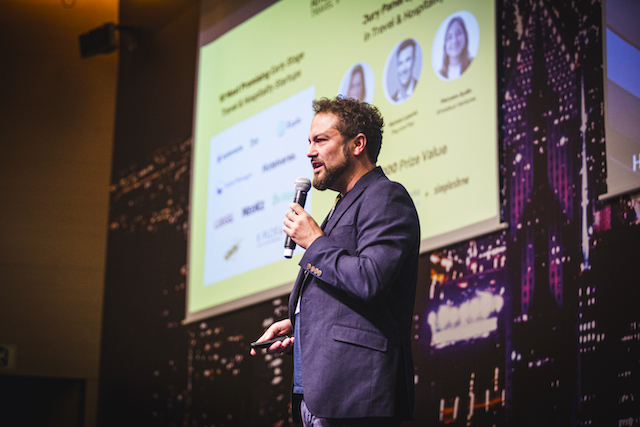
That’s it. Our first in-person FutureTravel Summit has wrapped up. And what an amazing event it was. We enjoyed inspiring keynotes, great conversations at the panels, and an exciting pitch competition featuring startups from across the world. Bringing different voices and perspectives from across the travel industry, the networking sessions were full of energy and lots of important connections made. 

The main goal of this year’s FutureTravel Summit was to bring together the players who are driving the travel sector forward, concerned about the future of the industry and willing to go the extra mile to stay on top of the latest innovations in the sector. The idea was to mix, make people listen to each other, talk to each other. Panels with participants from different sectors, a diverse audience and an energizing networking break. 

The “petit comitè” atmosphere of this year’s event did not keep people from actively engaging with the speakers and panelists of the event – more like the opposite. The intimate atmosphere made it possible for the audience to take an active part in the sessions that were happening on stage, and we really loved having such an engaged audience and Q&A sessions. At the same time, the networking breaks were full of life, people were very eager to get to know each other and there was such a buzz of energy.

Highlighting future industry leaders

Aside from highlighting innovations and trends pushing the travel industry forward, we also got to feature the up and coming innovators and thinkers of the sector. One of the highlights of the event was our Pitch Competition, where 10 finalists shared about their businesses in front of the audience and the jury. We received 200 applications this year and the competition was fierce!

This year’s winner was NeoKe, who took home a prize package worth €56k which includes a spot in the Scaleway Growth Program valued at €36k, $10k in Freshworks credits for their product suite, and €9,9k in credits for an explainer video maker premium account of Simpleshow. 

Built in Germany, NeoKe is on a mission to solve the problem of manual ID verification processes at airports, hotels, and car rentals by transitioning to digital IDs. It’s a digital world and NeoKe wants to bring this into travel, bringing the sector up to standard and removing friction for travelers. Founded in 2022, the startup connects booking platforms and travel services directly to the digital ID of a traveler for easier trip planning and booking. 

Thank you to our sponsors

The FutureTravel Summit was only possible with the support of our amazing sponsors: 

Hyatt Regency Barcelona Tower: The space that hosted this year’s event, Hyatt Regency Barcelona Tower is part of Hyatt Hotels Corporation, a leading American multinational hospitality company that has been managing and franchising luxury and business hotels, resorts, and vacation properties since 1957. As of today, Hyatt’s portfolio includes more than 1,150 hotel and all-inclusive properties in 70 countries across six continents. The hotel, designed by the prestigious British architect Richard Rogers, has a futuristic silhouette, and offers different possibilities from small to large meetings, as well as for pleasure, making it ideal for guests who wants to enjoy a luxurious treatment with personalized services that anticipates their every need.

TravelPerk: Born in Barcelona, TravelPerk is the next-generation business travel platform pioneering the future of business travel and empowering people to get together in real life. The all-in-one platform gives travellers the freedom they want whilst providing companies with the control they need – saving time, money, and hassle for everyone. TravelPerk is a traveltech unicorn and has the world’s largest travel inventory alongside powerful management features, 24/7 customer support, state-of-the-art technology and consumer-grade design, all of which are enabling companies worldwide to get the most out of their travel.

LUGGit: How often did you wonder what to do with your luggage before check-in or after check-out? LUGGit solves this for you by providing a luggage pickup, storage and delivery service. Through the mobile app or the website, you can request a Keeper (driver) to collect your luggage where you are, store it for as long as you need and deliver it back to the place and time of your choice. LUGGit has been operating in 5 European cities (Lisbon, Porto, Vienna, Prague and Barcelona), and in 2020, it was considered the 2nd Most Innovative Solution in the World by the World Tourism Organization.

Passero: Offering a visual, collaborative itinerary planner for millennial and Gen Z travellers who obsessively chase new experiences, Passero is one of the industry’s new gamechangers. Using Passero,ou can organize all your ideas in one place, make decisions faster using our custom-designed surveys, and create a shareable itinerary within minutes. Passero is launching a new community-driven marketplace where travellers can exchange ideas and stories with other like-minded travellers and receive personalized offers from relevant providers while they actively plan. Passero makes planning fun for travellers and conversion marketing affordable for travel service providers.

We are looking forward to keeping the conversation going online, and to see you at next year’s FutureTravel Summit!

Check out this amazing gallery we’ve put together of the event – if you were there maybe you can spot yourself?

Asia’s big bounce back ᕙ(‾̀◡‾́)ᕗ

→ Subscribe to our newsletter for a weekly curation of the top travel news, straight to your inbox.

Here is your weekly curation of the top innovation, trends and startups shaping the travel industry:

  • Asia’s big bounce back. Tourism revenue dropped right around the world in 2020 (we needn’t explain why) but Asia-Pacific was hit the hardest, feeling a drop of about 59%. However, the region has bounced back and is now actually looking like it’ll be the first market to recover. The region might have taken longer to open back up, but thanks to soaring numbers of travel this year, tourism’s contribution to GDP is expected to grow at an AAR of 8.5%. This is in addition to a prediction that 65% of new travel-related jobs will open up in Asia-Pacific. Find out more in this report.
  • All-in-one support for local hoteliers. The life of a small business owner in the hospitality sector isn’t an easy one. Aside from competing for space in the market, keeping up with digitalisation and crafting the very best experiences possible, there’s also a need to be at the top of your game with business savvy and market insights. To give local hoteliers a comprehensive all-in-one tool, Barcelona-based SaaS startup Amenitiz has just acquired French firm Ododo as it strengthens its position in the travel tech sector and helps users to build an online presence, take payments, craft experiences, and find educational and training tools. At the same time, the travel innovators will leverage the deal to launch their very own, The Hotel Club – a multilingual training platform on which hoteliers all over the world can find concrete, didactic and practical training, completely free. In addition to the training courses, physical events will be held regularly throughout Europe.
  • Peaceful stays and peace of mind. Guest screening and insurance are big topics when it comes to short-term rentals, and providers are increasingly looking for ways to know more about their guests before they arrive in order to have some peace of mind. It’s great to see a startup actively tackling these issues. Safely has raised $12 million to accelerate growth of its solutions for short-term rentals. Founded in 2013, the US-based startup focuses on providing safe rental experiences and insurance for individual homeowners and professional property managers.
  • News about European startups in your inbox. If you are curious about the latest news, updates and insights from the wider European startup ecosystem, I strongly recommend you to check out the EU-Startups newsletter. It’s a great chance to join more than 60k subscribers in staying up to date with Europe’s startup community, as well as checking out interviews, insights into who and what is shaping the future of innovation in the region and more.
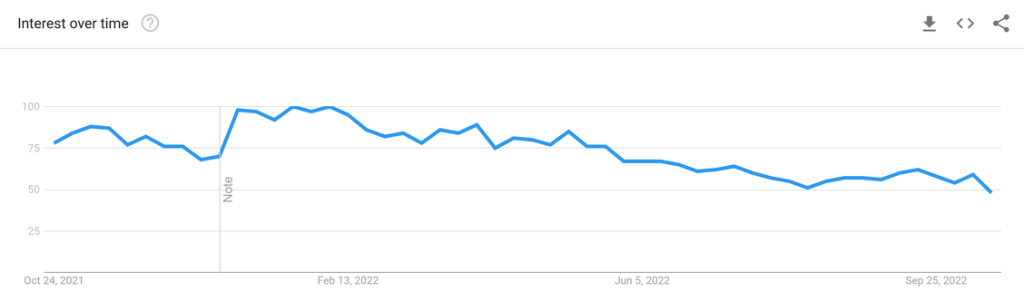
  • Blockchain news giving you the blues? I just did a quick check with Google Trends to see where the general interest in blockchain is these days, on a worldwide level. You can see the result on the image below – seems like it is the lowest it has been in the last 12 months. The world was in a blockchain craze there for a while, so this downturn is interesting to note. With that being said, it seems like tech startup Pinktada found a sweet spot and has just raised $975k to expand their blockchain-based hotel marketplace. The platform lets travellers book a specific room and then swap or sell their reservation if their plans fly off course. The Houston-based startup also lets travellers explore rooms and amenities in 3D prior to booking.
  • Empowering sustainable travel choices. Booking.com just partnered with Norway-based CHOOOSE to make it easier for everyone to make more sustainable choices when traveling. Through the partnership, the climatetech startup aims to “make information about carbon emissions more accessible and ultimately actionable for people worldwide”. They also engaged in partnerships with Amadeus, Trip.com, Heathrow and several airlines. Booking.com is one of the industry’s biggest names and has been actively pushing sustainability, so it’s really great to see how collaborative efforts like this one are pushing forward a new era of travel.
  • The reality of aviation emissions. The truth is catching flights emits carbon. We are not yet at a point where planes are carbon-free and they are a massive pollutant. We have seen great initiatives to offset this, and to make flying as sustainable as possible, but, there’s a growing concern that what we are actually seeing is greenwashing. Shedding light on the matter, and aiming to genuinely empower more sustainable travel is Oncarbon’s Jussi Ahola in this interview with Patricia from EU-Startups.
  • Happy days for Holidu. Munich-based Holidu just raised over €100 million in an oversubscribed funding round for its vacation rentals software and services. As travel bounces back and the popularity of vacation rentals jets to sky-high levels, the Munich-based startup is reaping the benefits. Its rental search engine reached more than 110 million visitors in the last 12 months and is developing a second strand of business – Bookiply. It’ll target hosts and help them to boost their online presence and get them more bookings.
  • Ready for (air)taxi and take off? Taxi’s themselves have been changing over the last couple of years. We don’t even ‘call’ a cab anymore, instead we just book instantly on an app and click a couple of buttons. But, before we know it, everything could be changing again and taxi’s might take to the sky. South Korea-based Plana has raised $8.3 million to develop its hybrid-electric vertical takeoff and landing (eVTOL) aircraft with plans to launch the first flight in 2024.
  • Jet2 bets on booming travel to continue. UK-based airline Jet2 has just ordered 35 new Airbus A320neo aircraft worth $3.9 billion at list prices, with an option to extend this to 71 aircraft. Clearly, the airline is confident that the demand for package holidays is set to continue and they want to be ready to feed that customer appetite. It’s a big move of confidence while the rest of the world looks to tighten its pockets, and it could be a move that inspires more growth in the industry.

Meet the city that has robots as guides

→ Subscribe to our newsletter for a weekly curation of the top travel news, straight to your inbox.

We are ready to head straight to our weekly curation of the top news on travel innovation, trends and startups. Here we go:

  • Budapest tourism to be fueled by AI. AI is increasingly shaping the travel and tourism space, and now the city of Budapest is getting involved. Budapest Brand has partnered with The Trip Boutique to give travellers a more personalised stay in the city, offering tailored itineraries that match visitors interests, styles and tastes – all available free of charge. By embedding The Trip Boutique’s solution into its website, Budapest is opening itself up to a new era of travel and tourism and setting the trend for other cities to follow suit.
  • HolidayHero raises €500k to build travel loyalty. When looking for a place to stay, travellers are really spoiled for choice. With household names like Airbnb and Booking.com giving travellers an array of lodging options at the click of a button, hosts and hoteliers need to find new ways to secure loyalty and increase repeat businesses. Helping them do just that is HolidayHero, a Dutch startup on a mission to empower stay-providers around the world to exceed guest expectations with its booking app that enables hyper-personalization. The startup has now raised a fresh €500k to expand.
  • Tourism is an industry, travelling is a lifestyle. Let me tell you something: travel really is something unique. As they say – it’s one of the few things that we spend money on and yet become richer. Truth is the way we recount our travel experiences has changed exponentially. While travel was traditionally about discovery and exploration – it’s now a commercialised experience and with commercialization comes competition. The problem with this commercialization is that it can come hand-in-hand with exploitation, right? It’s up to the travel industry to remember the inherent beauty of travel, and create sustainable, educational ways for consumers to enjoy it. This article really called our attention by shedding interesting reflections on the topic. And hey, this concept of innovation and sustainability will take centre stage at the upcoming FutureTravel Summit, so make sure you join us there for this pertinent conversation about the dichotomy between travel and tourism. We are ready!
  • Bob W strengthens market reach. Tech-driven hospitality startup Bob W is ramping up its European reach with another strategic acquisition. The Helsinki-based company has just snapped up Nordic competitor KOTI Hotel, expanding its offering of modern alternatives for short-stays. The startup aims to cater to the needs of the modern traveller who want both the quality of a hotel and the authenticity of a short-term rental, and it’s been defining itself as the key player in the market through strategic acquisitions in the Nordics.
  • Fueling local economies tourism revenue, RootRez raises $1.8 million. Founded in 2015, RootRez provides destination tourism organisations with a fully customizable white-label booking engine to help drive local economic demand. Now serving cities across North America, the startup has picked up fresh funding and aims to expand further in the region. Its e-commerce solution layers localised promotions and packages for travellers combined with hotelier business alignment, helping both boost revenue and data insights.
  • Reality hits Captain Kirk. Last October, William Shatner went to space with Jeff Bezos’ Blue Origin. Different from what I’d expect from a space trip, the actor, known for portraying Captain Kirk in Star Trek, has shared that he experienced profound sadness in seeing the earth whilst amongst the stars. The experience has left a lasting impact on him – and apart from making us sit back and reflect on the reality of destruction on earth, it’s probably not the best marketing for the space travel we are all meant to be super excited for. Here is some of what he had to say: “My trip to space was supposed to be a celebration; instead, it felt like a funeral. It was among the strongest feelings of grief I have ever encountered. The contrast between the vicious coldness of space and the warm nurturing of Earth below filled me with overwhelming sadness. I love the mystery of the universe, all of that has thrilled me for years… but when I looked in the opposite direction, into space, there was no mystery, no majestic awe to behold… all I saw was death.”
  • Airports facing a new threat. We talk a lot about bringing more tech to the travel industry and the many opportunities that the digital have for the market. But we often don’t talk about security issues. In times of war, spaces and places become a target – like has just been the case of the security of US airports. Cybersecurity is a big topic right now, with new tech to keep us safe and prevent hackers urgently needed, and with the capability to constantly evolve. The world is at a tense place right now, and airports are becoming a target – which will have colossal consequences on economic, political and societal levels.
  • I guess the rumours were just… rumours? As travel agency TripActions was a hot topic of gossip recently, with talk of an upcoming IPO, the firm has just revealed that it has raised over $300 million and hit a valuation of $9.2 billion. So – it looks like the rumours were exactly that, just rumours, and all the cryptic tweets were just hype building. We love a bit of hype and they are certainly one of today’s big change makers so you can expect us (and everyone else really) to keep a close eye on what’s to come.
  • Booked It Group snaps up more travel business. Booking management and marketing firm has been making moves into the travel industry, and now it has made another acquisition. The company is consolidating its place in the sector through making strategic deals, this latest one taking over More Life VIP gives the brand influence in luxury travel and comes 6 months after they bought Party Hard Travel, which delivered 10,000 bookings in less than three months last summer. The More Life VIP acquisition will see Booked it Group expand into the travel industry by using the luxury brand’s media side and associations with influencers. Previous campaigns have included campaigns with hotspots like Ushuaïa Ibiza Beach Hotel, Nobu Marbella and Calista Luxury Resort in Turkey.
  • Travel, fun and experiences: the Travello trifecta. The Australian startup that specialises in youth travel experiences, Travello, has just raised €6.5 million in its Series B funding rounds, enabling it to take advantage of the resurgence of demand for travel experiences. While many youth-travel-orientated brands didn’t make it through the pandemic, Travello is finding itself enjoying impressive growth and able to capture a large proportion of the market share. Young travellers are after adventure, the discovery of new experiences, and to have it all digitally accessible – and this is exactly what Travello are offering.

Talent crisis and flights canceled. Chaos in travel?

→ Subscribe to our newsletter for a weekly curation of the top travel news, straight to your inbox.

This week we jump directly to our weekly curation of the top news on travel innovation, trends and startups. Here we go:

  • Sit back and *don’t* enjoy the flight. Call it the surprise of the century, but after getting everyone’s attention earlier this year, with promises of a new ultra low cost transatlantic route, Norse Atlantic has just started cancelling its winter flights. Norse launched in the summer, largely replicating Norwegian’s business model. But now, they’ve had a hard lesson to learn – long haul leisure is largely seasonal and maintaining demand through the winter is tough going. Now the question remains: what’s next for the company?
  • Better balancing of flight demand. Taking off with $6 million, Atlanta-based Volantio is aiming to help airlines optimize their revenue and operations. The startup uses machine learning to track flight demand and encourage travellers to opt for flights that have more space available as opposed to those that are close to selling out. It gives travellers a better flight experience and also helps boost revenues – a win-win for all involved.
  • Workstream raises $60 million to lend a helping hand to the hospitality labour crisis. As hospitality businesses across the world struggle with talent shortages, hiring platform Workstream is expanding into the restaurant, hotel and retail business. The company, which aims to serve the deskless workforce, has just raised an additional $60 million. The platform automated the recruitment and onboarding process, cutting hiring time down and helping businesses better match expectations of prospective employees.
  • Booking.com joins forces to Klook to let travelers book more. As the attractions and travel experiences market becomes even more digitised and competitive, market giant Booking.com has made another strategic partnership – joining forces with Klook in Asia Pacific. As a result, the company is giving travellers access to a wider diversity of tours, attractions and experiences around the world, staying away from popular ‘must-do’ activities to niche and unusual experiences in over 1,100 destinations.
  • Hospitality sector is watching the food industry. We love to keep an eye on the latest trends, and it looks like hospitality actors should really consider food – what they’re offering, where it’s coming from, and that overarching theme of sustainability. Hospitality and food are intrinsically linked, and, due to the climate crisis, increasing global food supply problems, food insecurity and the rise of alt-protein, hospitality actors need to be paying attention.
  • Rumours running wild? Travel unicorn TripActions has found itself front and centre in business gossip last week, with rumours abound that it is heading towards an IPO. The company has remained secretive on the topic, describing current negotiations as simply another funding round, and not an IPO plan with Goldman Sachs. It seems the less we know, the more curiosity grows.
  • Partnering up to power travel growth. Amadeus is joining forces with Colombian super app Rappi to grow a shared vision of frictionless travel for a new era of consumers. With its search and automation tools, Amadeus will power Rappi’s Travel service and scale the product further.
  • Towards a future of inclusive travel. We love travel and we wholeheartedly believe it should be enjoyed by and accessible to everyone – regardless of their background, orientation or beliefs. That’s why we are super excited to see that payments platform WeTravel and Queer Destinations have launched a course focused on building an inclusive travel business, addressing LGBTQ+ concerns.

Robots at the Airport

→ Subscribe to our newsletter for a weekly curation of the top travel news, straight to your inbox.

Here is our weekly curation of the top news on travel innovation,

trends and startups:

  • Robots at the airport. Aeroporto di Roma has adopted a new fully autonomous delivery robot. This means air passengers can scan a QR code to purchase F&B and retail items at the airport and get them delivered right up to the gate in a digital and completely frictionless experience. This is part of their long-term strategy, aimed at maintaining the highest levels of service and enhancing the passenger experience using technology and innovation. My favourite part: Ottonomy, the startup behind the autonomous robot, took part in ADR’s acceleration programme and has been chosen for their cutting-edge innovation.
  • Indonesia takes the funding spotlight. The Indonesia-based OTA Traveloka has secured $300 million funding to support their growth. Seems like the financing round attracted interest from some long-term capital providers, and ended up with an oversubscribed transaction. “As our business continues to accelerate while the industry emerges from the pandemic, this financing allows us an opportunity to further strengthen our balance sheet and enable us to continue to focus on our core business while also building for the future,” said Ferry Unardi, CEO and Co-founder, Traveloka.
  • Growth sprint. After raising $170 million last August and recently adding YieldPlanet to their umbrella, Guesty has now acquired two hospitality software companies: Kigo (Spain) and HiRUM (Australia). The deals are aimed to expand their global reach, increase its resources in research and development and boost product development for customers of all three platforms.
  • SAF Commitments and Investments. JetBlue reinforced their plans to transition to sustainable aviation fuel (SAF) with a new agreement with Air Company, which is creating carbon-negative alcohols and fuels from carbon dioxide (CO2). JetBlue committed to buying 25 million gallons of Air Company’s sustainable aviation fuel (SAF) between 2027 and 2032. This comes right after JetBlue Ventures announced their investment into Air Company’s Series A funding round. It’s the kind of push that we like to see moving the industry forward.
  • Acquisitions opening new markets. After successfully closing 2 acquisitions across Europe just this year, Borrow A Boat is now expanding into new territories. The UK-based startup now announced the purchase of KellyBoat and is counting on their local knowledge to boost their tech platform in the United States, one of their fastest-growing markets.
  • Traveltech is taking off. Earlier this week, we announced that FutureTravel and TravelThink are joining forces. Our goal is to provide our readers with better content and industry insights, at the same time that we increase our reach (we’ll now reach over 22k subscribers!). With this new partnership, Dr. Javier González-Soria will also be joining the editorial team of FutureTravel. As you can imagine we are very excited for this milestone and for what’s ahead for our team!

Smart Destinations, Creators and Hotel-verse

→ Subscribe to our newsletter for a weekly curation of the top travel news, straight to your inbox.

Here is our weekly curation of the top news on travel innovation, trends and startups:

  • No funding, no problem. UK-based Pluto has had a pretty out-of-this-world story. After two big crowdfunding campaigns, raising over £1.3 million and a strong community following along the way, the team found new investment drying up. So, they looked for another way to keep their travel app that helps users organise and coordinate travel plans and insurance alive – acquisition. Travel app Orbzii has just picked up the B-Corp startup. It might not have been the plan all along but it shows how sometimes we have to be agile and adapt.
  • How destinations are getting smarter. Truth is: data drives everything these days and is the underlying factor informing business decisions and processes – and now it’s making destinations ‘smarter’. Utah-based Zartico captures data regarding a visitor’s geolocation spending habits and engagement with the experience, then analyses it in combination with data from social media and CRM systems. It then gives destination operators and experience providers actionable insights on their guests to inform smarter choices. The startup has just landed $20 million to bring the tool to new markets like airports and sports venues.
  • All-in-one travel platforms are all the rage. Short-term rental platform Guesty, who raised $170 million not so long ago, has just taken over4 hotel-focused revenue and distribution platform YieldPlanet and unveiled a new Guesty Distribution Hub. A new phenomenon for the industry, it’ll act as a fully holistic hospitality distribution solution giving customers access to hundreds of hotel and short-term rental distribution channels along with integrated financial tools from one dashboard.
  • TakeMe is taking travellers to better restaurant experiences. As Japan’s tourist industry opens up once again to the world, restaurants can count on TakeMe to attract travellers. The Tokyo-based startup provides a restaurant-reservation service for international travellers – helping them find the places to enjoy good food and easily pay for it. It’s now linked millions of tourists with more than 400 restaurants across Japan and is enabling over 10k merchants to accept global payment methods. They’ve just scored $1.8 million to keep growing the dream.
  • Hotelverse is taking on hotel-verse. Spanish startup Hotelverse has just taken off with a fresh €1 million. Founded in 2021, the startup is using digital twin tech to shake up the hotel booking process. So, you can book a room and curate your stay just as you like it. The early-stage innovators are one of the finalists of this year’s Pitch Competition at our upcoming FutureTravel Summit! Got your ticket yet? It’s on November 4th in Barcelona – don’t miss out!
  • Travel in the age of the creator economy. Influencers and creators are shaping most industries – and travel is no different. Banking on the creator boom, startup Trovatrip enables influencers to plan, sell and host group travel experiences within their communities – whether it be a hike in Patagonia, yoga in Bali or yachting in southern Europe. The company has just snapped up $15 million and plans to expand to bring on even more creators. It’s only the beginning for this approach to travel!
  • It’s not deja vu, Flyr Labs has made another move. Hitting the headlines (again), Flyr Labs has just acquired Pace Revenue to extend the capabilities of its Revenue Operating System. Flyr Labs has been providing its ROS to airlines and is now taking on the hotel and accommodation market with this deal – expanding its reach in the travel industry.

A Fresh Look for Airline Shopping

→ Subscribe to our newsletter for a weekly curation of the top travel news, straight to your inbox.

Here is our weekly curation of the top news on travel innovation, trends and startups:

  • Taxis taking the skies. United has just made another investment into a possible future mode of mobility – airborne taxis. The American firm just put $15 million into EVE Air Mobility alongside a conditional purchase agreement for 200 four-seat electric aircraft plus 200 options. It comes just one month after a $10 million deposit for Archer Aviation’s similarly sized air taxi. While the tech to make this flying taxi isn’t around just yet, there is certainly a lot of financial commitment flying around, so catching a cab could become very different very soon.
  • The making of a global hero. In a massive transaction deal, worth a total value of €82 million, Wirtualna Polska Holding has acquired Hungarian online travel agency Szallas Group. Founded in 2007, Szallas Group has been paving the way forward in CEE, pioneering booking processes in the region – ranging from accommodation to spa packages, tours and activities and more. After showing how to walk the walk, the firm has been snapped up by the brand behind Poland’s online travel and tourism services and will reach new global heights. Well done!
  • A perfect year? 12 months. 12 acquisitions. Yes, that’s right. It might seem surreal, but it’s been a busy year for Australian-based Intrepid Travel who has just taken over its 12th business this year, Joob, making it 12 in 12 months. Since 2019, the adventure travel firm has grown its range in Australia by 45% and their growth journey has been one for the memory banks.
  • Cruising emission free. From carbon emissions and plastic pollution to workers rights and enviro-social impact, cruise ship operators have had a lot of criticism. Now, one Norwegian innovator is set to change the face of the industry, introducing a emission-free fleet. Northern Xplorer plans to begin operations at the start of the 2025-26 season, capitalising on Norway’s decision to ban fossil fuel-powered ships from its world-heritage fjords. The fleet runs on a fully electric propulsion system, making them emission-free and an exciting move towards sustainable travel.
  • Global alliances made. In 2014, two exciting companies hit the travel market, one targeting Europe and the other spreading its wings in Asia. Both have become leading names in their geographies and now they’re teaming up to take on the world. Tiqets, based in Amsterdam and Klook, based in Hong Kong, have announced that they will now be sharing content across the platforms, so customers can book experiences and activities offered by each platform on either site with instant ticketing and multiple languages and payment options, giving travellers more choice and suppliers more visibility. It’s a powerful alliance of two promising companies.
  • Theme parks stay on trend. Despite doom and gloom expectations, theme parks are still a hot topic and it’s been reported that demand and spending is actually exceeding pre-pandemic levels. It’s largely part of a commitment by theme parks to constant reinvention – to introducing new attractions on the regular, to personalising the experience, and betting on return visits for special features rather than simply relying on once-in-a-lifetime travellers.
  • Airline shopping gets a fresh look.It’s been a while since airlines have been trying to ramp up retail offerings – going beyond simple souvenirs to creating enjoyable, personal shopping experiences. But, it’s something that has always felt a little half-hearted. Things are changing though, and now Flyr Labs has acquired German retailing and offer management company Pribas. It’s a deal that will see Flyr’s AI platform enable partners to personalise retail experiences and maximise revenues.