We’re excited to welcome Margherita Galluzzo, Brand Marketing Director at WeRoad, to the FutureTravel Summit 2026. Margherita’s path into travel wasn’t the obvious one. She started out in the public sector, then moved to Huawei as Brand & PR Manager for its Honor brand, before joining WeRoad in 2019, promoted to Senior Global Brand & Activations Marketing Manager after just two years.
Today, as Brand Marketing Director, she oversees campaigns across Europe and the US, leading a creative team known for challenging the norms of travel marketing and helping build WeRoad into Europe’s largest and most recognisable community of travellers. She stays close to that community herself too, working directly with travellers as a WeRoad group leader.
At the FutureTravel Summit, Margherita will join a panel on creativity, exploring how it still matters, despite the push for AI integration . Join us in Barcelona on October 29 to hear it live! Join us in Barcelona on October 29 to hear it live!
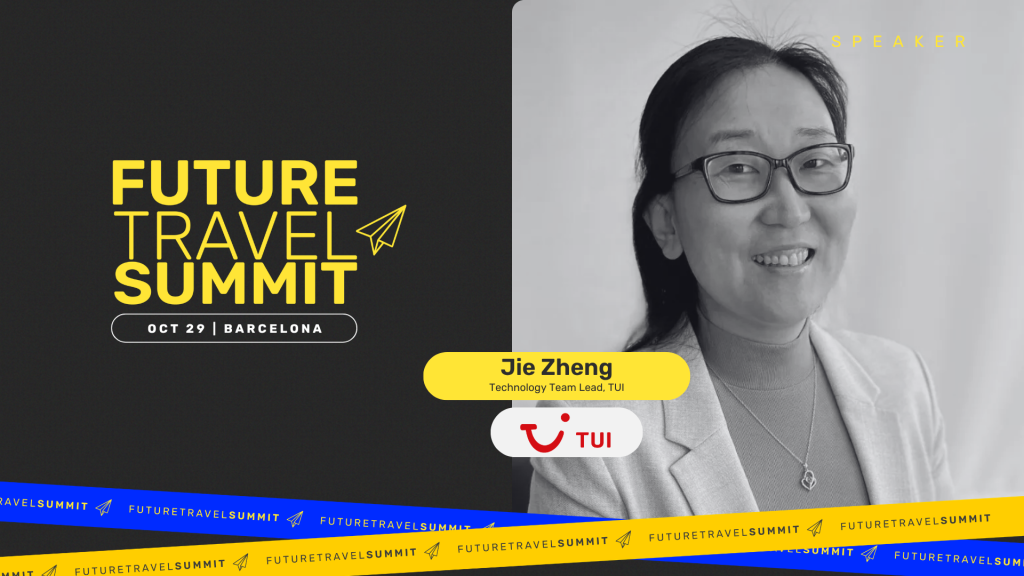
We’re excited to welcome Jie Zheng, Technology Team Lead at TUI‘s Innovation Hub – Sourcing, to the FutureTravel Summit 2026.
Jie leads a team of product, data science, and AI engineering specialists, focused on turning emerging technology into practical business value and making innovation accessible across the company. As an open innovation champion and Innovation Fellow with Grow London, she is doing her part in scaling innovation.
Her team’s mission is to help the organization make better decisions across three areas: buy, build, and community. This means understanding when to adopt the best existing solutions, when to create something new, and how to build a community of colleagues, partners, and practitioners around a shared purpose.
At the FutureTravel Summit, Jie will join our live “AI, honestly” panel, sharing real use cases and behind-the-scenes lessons from implementing AI in travel.
Join us in Barcelona on October 29 to hear it live!
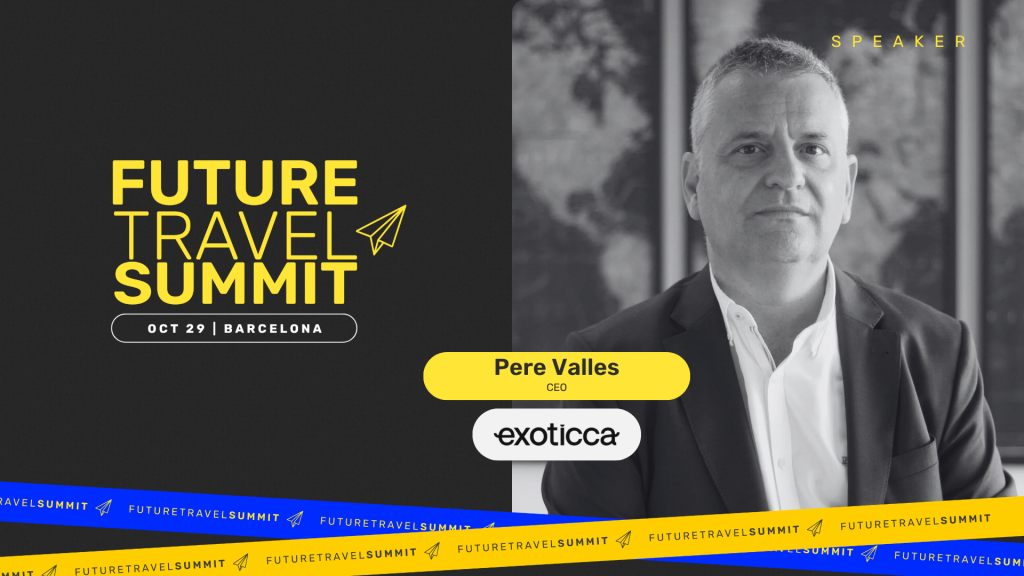
We’re excited to welcome Pere Vallès, CEO of Exoticca, to the FutureTravel Summit this October in Barcelona. Pere leads Exoticca, a traveltech platform bringing premium multi-day tour packages within reach for travelers around the world. By pairing technology with curated experiences, Exoticca has become one of the most dynamic players in modern travel, helping people discover the world through seamless, end-to-end journeys.
Pere has led Exoticca as CEO since 2018. Alongside this, he is co-founder and General Partner of Smartech Capital, a venture capital fund investing in technology startups, and serves as Operating Partner at Enzo Ventures, where he supports traveltech companies in the fund’s portfolio. He also chairs the board of Universitat Oberta de Catalunya, the world’s first online university.
At the FutureTravel Summit, Pere will be joining a panel on making decisions without seeing the full picture. Good leadership depends on making good decisions, and the panel will explore how leaders can do that even when the future is impossible to predict. Join us in Barcelona on October 29 to hear it live!
We’re excited to welcome Nithya Ramesh, Senior Regional Director, Europe at Trip.com, to the FutureTravel Summit this October in Barcelona.
With over a decade of global leadership experience across technology and travel, Nithya has built her career at the intersection of product strategy, operations, and market growth. Before joining Trip.com, she led product and strategy teams at Deel and Uber, driving international innovation and expansion.
Her diverse background spanning fintech, mobility, and travel has shaped her expertise in scaling digital products and leading multifaceted teams. Now, in her role at Trip.com, she oversees collaboration between regional product, analytics, and marketing teams to establish an impactful local market presence.
At the FutureTravel Summit, Nithya will join a panel speaking on the ins and outs of AI innovation. Everyone is working towards AI incorporation, but how is it actually being done? This panel will dive into the interesting ways that companies fund, prioritize, and integrate AI tools. Join us in Barcelona on October 29 to hear it live!
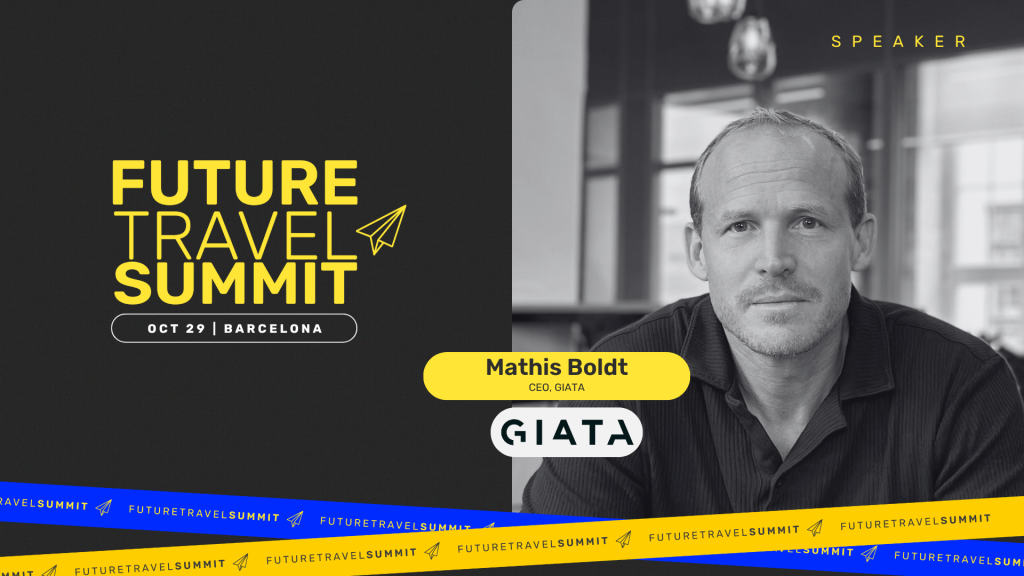
We’re excited to welcome Mathis Boldt, CEO at GIATA, to the FutureTravel Summit 2026. Mathis has spent more than two decades shaping digital travel, through leadership roles at Booking.com and GetYourGuide. At Booking.com, he managed operations across Germany, Scandinavia, and Eastern Europe with 600+ employees, before moving to Amsterdam to lead Global Strategic Partnerships. At GetYourGuide, as Vice President, he spearheaded international expansion and built a team of over 150 people across 15 global offices.
Today, as CEO at GIATA, he helps hotels and travel companies connect accurate, structured, AI-ready content across the digital travel ecosystem.
At the FutureTravel Summit, Mathis will deliver a keynote on what happens when travel technology needs to serve a new audience: machines. As AI moves from helping travelers search to evaluating options and making decisions on their behalf, he’ll explore what this means for the future of travel discovery and distribution, and why data quality becomes critical in an AI-driven world.
Join us in Barcelona on October 29 to hear it live!
We’re excited to welcome Tomasz Pawliszyn, the CEO of AirHelp, to the FutureTravel Summit this October in Barcelona. Bringing over two decades of executive leadership experience in complex and dynamic environments, Tomasz has consistently driven extensive transformation initiatives across global businesses.
Early in his career, he gained valuable experience at Toyota Motor Corporation, serving within its Global Headquarters in Japan as well as across Europe. He subsequently held senior leadership positions at Studio Moderna, a leading multichannel retailer, where he served first as Global Director of Operations and later as Regional Executive Director for the CEE region. Prior to his appointment as CEO of AirHelp, Tomasz served as the company’s Chief Operations & Chief Technology Officer, where he played a pivotal role in shaping its operational and technological strategy.
At the FutureTravel Summit, Tomasz will be joining a panel on decision-making in leadership without complete certainty. He will speak on some of the approaches leaders can take in order to stay current when demand patterns are increasingly unpredictable. Join us in Barcelona on October 29 to hear it live!
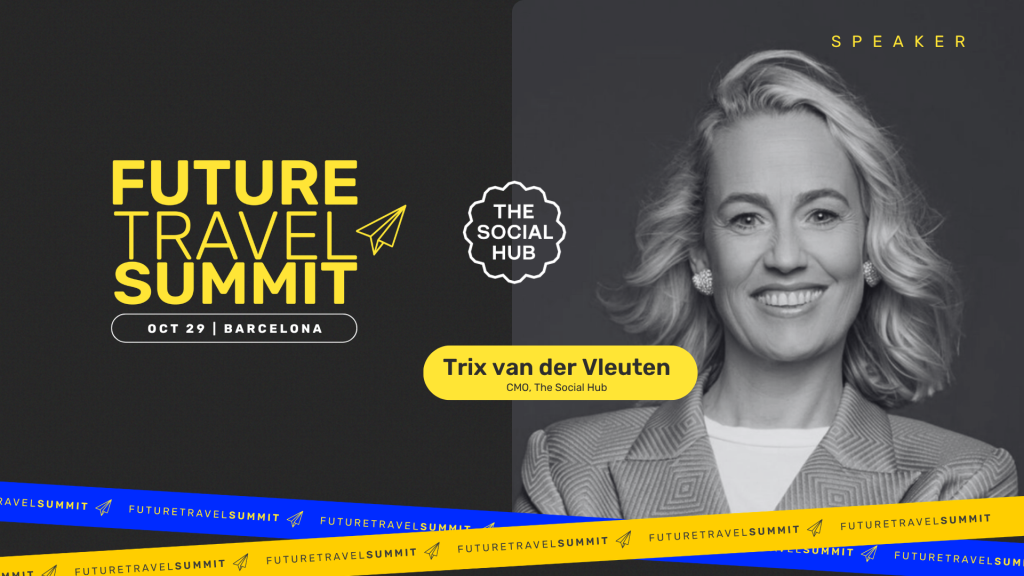
Trix brings nearly two decades of experience in business transformation at international companies. Before joining The Social Hub, she led programmes that reshaped brand perception and customer engagement at the likes of KFC, Versuni, Kraft Heinz, SABMiller, and PepsiCo.
As CMO, she leads The Social Hub’s Marketing & Performance team, sharpening the brand’s strategic thinking and commercial activities while keeping social impact and industry leadership at the centre of the story. Beyond The Social Hub, she sits on the board of several organisations and is a frequent guest lecturer at leading institutions.
At the FutureTravel Summit, Trix will join a panel on creativity, community, and trust in travel, exploring how brand-building shows up in the numbers, from guest loyalty and repeat bookings to occupancy and partnerships. The conversation will dig into what it takes to build a community travelers feel part of, and the commercial case for creativity when the easier path is to automate and blend in.
Join us in Barcelona on October 29 to hear it live!
Bruce founded G Adventures in 1990, after a backpacking trip through Asia, at just 22 and with two maxed-out credit cards. Today it’s the world’s largest small-group adventure travel company, welcoming more than 200,000 travellers a year across 100+ countries.
Bruce is best known for “communityship,” the community-first philosophy he built G Adventures’ culture around, and for founding the Planeterra Foundation, which has channelled traveller spending into more than 160 community development projects worldwide.
At the FutureTravel Summit, Bruce will deliver a keynote on communityship and travel’s power to be a force for good, exploring what happens when a community of agents, suppliers, travellers, and employees comes together around a shared purpose. Drawing on real examples of community tourism in action, he’ll unpack what it takes to turn that shared responsibility into lasting, meaningful impact. Join us in Barcelona on October 29 to hear it live!
The FutureTravel Summit is back to Barcelona on October 29th, and this year we are back at the beautiful Antigua Fábrica Estrella Damm – a former brewery turned into one of the city’s most vibrant cultural venues.
On top of the speaker sessions, there’s one moment that always brings the energy: our startup pitch competition. 10 early-stage travel startups take the stage, and that’s their shot to impress the jury and take home a prize package worth €150K.
The Prize Package
The winning startup team will receive a prize package with a value of around €150K in credits. The prize package items include the following:
$100,000 in Cloudflare credits, including a dedicated account manager and technical sessions with Cloudflare experts to optimize your infrastructure.
90% discount on HubSpot‘s AI-powered and connected CRM (valued at $17,000 USD) to scale sales, marketing, and customer operations.
6 months free of Notion Business, including Notion AI (valued at up to $12,000) — roadmaps, projects, fundraising, hiring, all in one place with AI-powered insights.
25,000 streaming minutes for Live Video Avatars from D-ID(valued at 12,500 €) for real-time, AI-powered video conversations.
12 months of ElevenLabs Startup Grants access; 33 million credits (valued at ~$5,500) and full platform access.
A complimentary booth at the FutureTravel Summit2027 (valued at €3,500), including 3 event tickets.
The Jury
Our 10 finalists will pitch in front of a world-class jury composed of leading venture capital experts, including: Jose Gaytan de Ayala (Kinnevik), Merce Tell (Encomenda Capital Partners), and Suzanna Chiu (Amadeus Ventures). Additional VCs, business angels, and startup accelerators will also be in the audience, making this a great moment for high-impact exposure and feedback.
The Finalists
Now, time to reveal the 10 outstanding finalists of this year’s edition:
Bundleport: Bundleport develops an AI-powered operating system for travel companies that brings supplier connectivity, booking operations, and commercial decision-making into a single platform. It aggregates inventory from multiple suppliers, automates booking processes, identifies more profitable alternatives, and helps generate customer-ready travel proposals in seconds. By combining AI agents with real-time supplier connectivity, Bundleport helps travel companies reduce operational complexity and improve margins.
chuuchuu: Based in Belgium, chuuchuu helps travellers navigate long-distance train journeys across Europe with greater confidence. Its platform predicts delays and missed connections before they happen, suggests alternative routes, reserves backup seats, and automatically claims compensation for eligible disruptions. By combining journey planning, real-time travel assistance, and reimbursement services in a single app, chuuchuu aims to make international rail travel more reliable and stress-free.
dAIrect: Founded in 2025, dAIrect helps hotels become the preferred choice for AI-powered travel assistants. Its platform transforms hotel websites into AI-readable, structured content that can be understood and recommended by conversational AI tools, while continuously optimising content based on AI interactions and traveller intent. By increasing hotels’ visibility in AI-driven travel planning, dAIrect helps them attract more direct bookings and reduce their reliance on traditional online distribution channels.
Equera: Founded in 2025, Equera helps tour operators, travel agencies, and destinations digitise and distribute experience inventory that traditionally remains offline. Its AI-powered platform converts content from PDFs, voice notes, and flyers into bookable products, while also providing enterprise tools for managing experience supply chains. By bringing community-based tourism online and streamlining supplier onboarding, Equera enables travel companies to access unique inventory at scale.
Joaia: Founded in 2023 in Switzerland, Joaia enables destinations to create and manage their own AI-powered local travel guides using verified, destination-owned content. Its platform allows tourism organisations to publish conversational guides across websites, apps, WhatsApp, and other channels, while maintaining control over recommendations and visitor information. By combining AI with trusted local knowledge, Joaia helps destinations improve visitor experiences, influence traveller flows, and gain valuable insights into visitor intent.
Opally: Based in Denmark, Opally develops an AI-powered receptionist for hotels that automates guest communication across websites, messaging apps, email, and phone calls. The platform provides instant, context-aware responses using each hotel’s own knowledge base while supporting reservations, upselling, and routine guest requests. By centralising guest interactions in a single AI assistant, Opally helps hotels improve response times, reduce front desk workload, and deliver consistent service around the clock.
Sarucci: Founded in 2025 and based in Malta, Sarucci develops an AI-powered revenue intelligence platform for independent hotels. The platform combines business intelligence, dynamic pricing, market insights, and AI agents into a single solution that helps hoteliers optimise room rates and commercial decisions. By automating revenue management and providing explainable pricing recommendations, Sarucci enables hotels of all sizes to increase revenue without the complexity of traditional revenue management systems.
Ticketory: Founded in 2026, Ticketory provides a connectivity platform that gives travel sellers access to live experiences and attractions through a single integration. The platform aggregates inventory from suppliers, wholesalers, and ticketing systems, standardises product data, and automates booking and ticket fulfilment. It enables OTAs, airlines, hotels, cruise companies, and other travel platforms to expand their experiences offering while simplifying operations and reducing manual processes.
Travecta: Founded in 2026, Travecta develops the infrastructure layer for multi-day tours by connecting local tour operators with global distributors through a single API. Its platform automatically transforms unstructured supplier content into structured, bookable inventory while handling contracting, availability, and distribution. Designed for the emerging AI-driven travel ecosystem, Travecta helps tour operators digitise their inventory and enables distributors to access multi-day tours through one integration.
Tripio: Based in Germany, Tripio helps tour operators replace static travel documents with live, AI-powered digital trip assistants. The platform converts existing itineraries, PDFs, and travel documents into branded web apps that automatically update travellers with itinerary changes, flight updates, and important trip information in real time. By eliminating fragmented post-booking communication, Tripio improves the traveller experience while reducing support requests and manual work for tour operators.
Every shift in travel starts somewhere small. Come see 10 of the most ambitious teams take the stage with what they’re building next.
We’re officially opening the call for startups: the FutureTravel Pitch Competition is back.
On October 29th, Barcelona will once again host the FutureTravel Summit: a global gathering of travel innovators, startup founders, corporate executives, and investors. Set in one of Europe’s most iconic travel hubs, the summit brings together forward-thinking minds shaping what’s next in travel and hospitality.
The Pitch Competition is always a highlight of the event. It’s a launchpad for early-stage travel startups looking to gain traction, visibility, and strategic connections.
The Criteria
This year’s competition will see 10 early-stage startups that are:
Travel, tourism & hospitality startups
At pre-seed or seed stage
Founded within the last 3 years
If that sounds like you, apply through our application form. Applications close on July 20th.
The Prize Package
You’ll pitch live in front of a top-tier jury of investors and industry leaders. You have direct access to people who write checks and open doors in travel tech. You’ll get featured in FutureTravel’s newsletter and gain visibility across our channels and partner network.
On top of that:
$100,000 in Cloudflare credits, including a dedicated account manager and technical sessions with Cloudflare experts to optimize your infrastructure.
90% discount on HubSpot‘s AI-powered and connected CRM (valued at $17,000 USD) to scale sales, marketing, and customer operations.
6 months free of Notion Business, including Notion AI (valued at up to $12,000) — roadmaps, projects, fundraising, hiring, all in one place with AI-powered insights.
12 months enterprise plan on simpleshow by D-ID (5-user package, valued at €9,900) for high-quality, AI-powered explainer videos.
12 months of ElevenLabs Startup Grants access; 33 million credits (valued at ~$5,500) and full platform access.
A complimentary booth at the 2027 FutureTravel Summit (valued at €3,500), including 3 event tickets.
The jury
Startups will pitch in front of a jury that includes:
The jury’s questions and insights helped past participants shape their strategies, connect with investors, and grow their businesses.
More than a pitch
The FutureTravel Summit it’s a space for meaningful connections within the industry. Join us to meet the people building the future of travel, spark collaborations, and learn from the minds moving the industry forward.
Apply now for your chance to pitch and be part of one of Europe’s most dynamic event focusing on travel innovation.
A funny thing happened while the travel industry was celebrating its recovery. Demand is back, and different. The flights are full, the hotels are busy, but the map of where people are actually going has shifted. If your budget is still betting on the same cities, the map you’re using might be out of date.
The crowd is thinning at the top
For decades, London, Paris, Rome, and Barcelona dominated European travel. They’re still very popular, but the growth is spreading. More and more of the new demand is landing somewhere else.
According to Digital Sardine’s analysis of Google Trends data for US travellers searching flights to European destinations over the past two decades, London and Paris remain high-interest, but their relative share has declined while secondary cities have grown faster. Europe as a whole is attracting more travellers than ever, but a growing chunk of them are heading somewhere that wouldn’t have made the list ten years ago.
London’s case is particularly telling. Saturation, price inflation, overtourism fatigue, and the friction added by the UK’s new ETA requirement have all compounded at the margins. None of these factors is dramatic on its own. But in a market where travellers have more substitutes than ever, even small barriers are enough to tip the decision somewhere else.
Discovery moved first, then the flights followed
The redistribution started with how people find out about places. Short-form video, streaming, food media, and cultural content have reshaped which destinations enter a traveller’s consideration set, often passively, long before any search is made. A city gets featured in a Netflix series, a food creator posts from a market in Tbilisi, a travel account highlights the coastline outside Thessaloniki.. and suddenly a destination that wasn’t on anyone’s radar starts accumulating real search interest.
This is a structural change in how the top of the travel funnel works. Destinations can now build awareness without relying on traditional media or big marketing budgets. The consideration set has widened dramatically, and it keeps widening.
But curiosity alone doesn’t fill seats. What converted new interest into actual bookings was low-cost airlift. In 2025, low-cost carriers overtook mainline airlines to become the largest segment of European aviation for the first time, accounting for over 35% of all flights, up from near zero in the late 1990s. Ryanair, easyJet, Vueling, and Wizz basically rewired the map, turning secondary airports into viable options for mainstream travellers at scale. No route, no bookings – no matter how much interest there is.
The detour destination is now a default
Expedia’s Unpack ’25 research (based on a survey of 25,000 travellers across 19 countries) found that 63% plan to visit a secondary or detour destination on their next trip. Not instead of an iconic city, but alongside one. Reims near Paris, Brescia near Milan, Girona near Barcelona. Travellers are adding a stop that offers better value and fewer crowds, without scrapping the trip they originally had in mind.
Enough people are doing this now that it’s moving the needle on booking patterns, search behaviour, and where accommodation demand actually shows up.
What this means for travel brands
The next wave of growth won’t come from the same cities that drove the last one. It will come from dozens of smaller markets that don’t look like much individually, but add up to a lot when you zoom out. That has direct implications for where you build inventory, how you structure campaigns, and which markets you prioritise.
There’s also a real and underappreciated opportunity in search. Digital Sardine’s analysis of Google Ads data shows that CPCs for secondary and detour destinations are typically 15-30% lower than their iconic counterparts, with meaningfully less competition. The intent signal is just as strong (someone searching “hotels in Girona” is as close to booking as someone searching “hotels in Barcelona”) but the auction is far less crowded. Most travel brands haven’t structured their campaigns to capture this efficiently. The window for early movers is still open.
When everyone’s chasing the same cities, the game is optimisation. Now that demand is spread across dozens of smaller markets, the game is coverage: getting there before it gets obvious. The brands that move now will have a head start that’s hard to close.
→ This piece was produced in collaboration with Digital Sardine. Based on their research and data, it reflects FutureTravel’s editorial perspective on search, demand, and performance marketing in travel.
Someone opens ChatGPT: “Find me a hotel in Berlin next week, walkable to transit, quiet neighborhood, good for working remotely, under €150.” The AI considers availability, location data, reviews mentioning noise and WiFi, neighborhood characteristics, current pricing. Returns three options with reasoning. User picks one. Booking happens.
Try building this with a traditional travel API. In most cases, you can’t. Not because the hotels don’t exist. Because the infrastructure was built for humans clicking dropdown menus, not AI systems that need to reason about preferences and make autonomous decisions.
Most travel APIs still work this way: if the user selects “4-star,” return properties where star_rating = 4. Everything is explicit, binary, and predetermined. A human orchestrates every API call by clicking buttons. This architecture assumes the decision-maker is always a person in a browser. But uh, that assumption is breaking. And at least one company saw it coming early enough to do something about it.
Nuitée is a travel-tech infrastructure company backed by Accel, building the API backbone for how travel is distributed and consumed. Its platform is designed around three core capabilities: Connect (developer-first APIs and UI components for fast integration), Cloud (distribution and optimization solutions for hotels), and Cupid (a content-intelligence layer that structures and enriches travel data).
This isn’t about surface-level features or UI. It’s a structural approach to how data, APIs, and distribution logic are exposed. Built for scale, programmability, and automation.On top of that foundation, Nuitée has been pushing further with agentic APIs: not “AI-powered search” as a feature, but a deeper re-architecture of how the API layer works, one that allows systems to express intent, reason over constraints, and execute travel decisions programmatically.
The direction is clear: semantic search that interprets “boutique hotel near museums with rooftop access” as intent rather than matching exact keywords. Image-based room search that uses computer vision to find properties by actual visual characteristics, and not tags or metadata: lighting, layout, accessibility features visible in photos. Persistent context memory allows AI agents to refine requests conversationally instead of reconstructing queries from scratch. Response schemas optimized for language models, structured to minimize hallucination risk and reduce token costs.
But none of this is simple to build.
The APIs are designed for function chaining, where agents can autonomously decide to call search, then property details, then booking, with each step informed by reasoning about the previous results, not hardcoded if-then logic. This reduces the amount of orchestration logic developers traditionally have to hardcode, which is where much of the integration complexity used to live.
This is infrastructure built for a world where the thing making API calls is an AI that needs to understand intent, maintain conversation context, and make decisions dynamically. CEO Med Benmansour said tasks that previously took six months can now be completed in days. That kind of acceleration shows what’s possible when infrastructure is built for agents from the start. If you want to experience this for real, try vibe-coding a fully functional travel app in a few clicks using Nuitee´s liteAPI See how it works in one prompt
Most companies won’t do this kind of rebuild. Their current APIs work fine for traditional booking flows. Hard to justify ripping out infrastructure when revenue looks stable and backward compatibility is a constraint. Nuitée made the bet that the ground was shifting anyway.
The proof is in what’s being built on top. Revolut (the fintech super-app with 70+ million users) integrated Nuitée’s infrastructure to offer hotel booking without users leaving the banking interface. The experience understands you’re in a financial app: it shows total trip cost, handles currency properly, and integrates with expense tracking. This works because the API layer adapts to Revolut’s context rather than forcing users into a generic hotel search flow.
Nuitée’s Travel Creator Studio lets creators launch branded hotel shops where the system algorithmically curates properties based on the creator’s aesthetic and audience. No manual spreadsheet management. The platform connects to 3 million properties and handles the matching dynamically. TikTokers, Instagrammers, and YouTubers can negotiate exclusive rates directly with hotels and publish them on the platform, making those offers available only to their audience.
At a hackathon Nuitée ran with Google in October 2025, someone built a working running app that books hotels near marathon routes. It was built in 24 hours, and good enough to win! That’s only possible with APIs that can interpret “near this specific GPS route” and “check-in the day before race day” without those being predefined filter options.
These aren’t hypothetical use cases. They’re live integrations proving that when you rebuild infrastructure for reasoning rather than filtering, different kinds of distribution become possible. Embedded travel in non-travel apps. Algorithmic curation at scale. Vertical-specific booking experiences that actually understand context.
The pattern: each integration adapts to the user’s existing content. No generic booking flow forced on top. That only works if the API layer can reason about context.
The platform is backed by a content intelligence layer that understands, enriches, and optimizes travel content. It processes over 450 million hotel images using computer vision to standardize property data and generate contextually relevant descriptions. The same room can be presented differently depending on whether someone’s looking for accessibility features, sustainability certifications, or workspace quality. The content adapts to what matters for each request.
When distribution happens through AI agents and vertical apps, content needs to adapt. The same hotel room needs a different emphasis for different contexts. Static descriptions don’t scale.
They’re not building another OTA. They’re building what OTAs, fintech apps, creator platforms, and AI agents all need to function. Be the infrastructure, not the storefront.
If distribution really is fragmenting beyond traditional OTA websites into embedded experiences and autonomous agents, the company providing infrastructure for all those channels captures value from everything built on top. That’s the bet Nuitée is making with this rebuild.
The interesting question is whether they’re early or just on time. Their product roadmap suggests the window is now: deeper AI automation, loyalty integrations, making the infrastructure adaptive in real-time to demand and behavior. Everything is designed for a distribution model where autonomous systems make decisions, not just execute predetermined logic.
Most travel companies are making their filters faster. More results, better sorting, quicker load times. All useful. All built for humans clicking buttons.
Nuitée looked at the same landscape and decided the entire foundation needed to change. They spent the last months rebuilding APIs for semantic understanding, persistent context, dynamic reasoning. They launched tools for embedded travel and algorithmic curation. They’re processing hundreds of millions of images to make content contextually intelligent.
The bet: As AI embeds travel everywhere, distribution evolves from channels to programmable systems. That is the infrastructure Nuitée is building.
→ This piece was produced in collaboration with Nuitée. This is based on conversations with the team and reflects FutureTravel’s editorial perspective on where travel infrastructure is heading.
The FutureTravel Summit 2025 returned to Barcelona on 30 October, bringing together almost 500 of the brightest innovators in the travel industry at the iconic Antigua Fábrica Estrella Damm.
With a packed agenda of panels, keynotes, and networking, the highlight of the day was once again the FutureTravel Pitch Competition.
Ten early-stage TravelTech startups took the stage to compete for a game-changing €350k prize package. After one of the closest votes the jury has ever faced (and we mean close!), ReLUGG, a German startup that provides instant luggage compensation, was crowned the winner.
The pitch finalists
The competition featured ten ambitious startups from across Europe and beyond, tackling real-world challenges in travel with cutting-edge tech and creative business models. And while ReLUGG eventually took home the grand prize, each of the other nine startups brought something unique and worthwhile to the fifth edition of the FutureTravel Summit:
ALOE: Founded in 2023, ALOE is the experience layer for hospitality, a plug-and-play platform where hotels can sell their own services and offer curated experiences from local providers through an integrated marketplace. The Italian startup allows guests to book everything in one place, while hotels earn a commission on every sale. It simplifies the booking, management, and payment processing of external experiences, helping hotels unlock new revenue streams.
ALTEK AI: Headquartered in Norway, Altek AI helps hotels automate customer service. Its AI platform connects directly to hotel systems such as the PMS and booking engine, allowing the assistant to answer questions, make bookings, and upsell in real time. Their solution is designed to improve the guest experience, reduce staff workload, and increase revenue.
Controlá: Founded in 2023, Controlá installs plug-and-play smart devices to automate energy management in vacation rentals, offices, and coworking spaces. Their system detects presence and environmental conditions to automatically control air conditioning, lighting, and water heating, reducing energy consumption without compromising user comfort. Based in Spain, they promote sustainability adapted to your needs.
Cora: Set up in 2023 in Italy, Cora develops an operations management platform powered by AI and designed for every type of accommodation that seamlessly allows the control of any hospitality facility. It streamlines tasks like housekeeping, maintenance, and internal communication through a cloud-based dashboard and mobile app. The platform helps improve staff productivity, reduce costs, and ensure consistent service quality.
Cumbaya: Founded in 2024, this Belgian startup offers an AI-powered platform that simplifies trip planning, booking, and management. Users can instantly generate personalised itineraries based on their interests, needs, and budget. The app also provides real-time recommendations and dynamic tools to adjust plans on the go, streamlining the entire travel experience.
HostyAI: Straddling Portugal and Australia and founded in 2024, HostyAI offers a SaaS platform that helps short-term rental hosts and property managers automate guest communication. Their AI-powered assistant handles inquiries, sends personalised messages, and supports guests 24/7 across platforms like Airbnb, WhatsApp, and email. By integrating with reservation systems, it adapts responses based on booking details, house rules, and local regulations.
Via.ai: Based in the UK, Via.ai operates at the intersection of AI technology and customer engagement. Founded in 2023, the startup enables brands to integrate a branded, conversational assistant into their existing apps or websites, offering users real-time, personalised travel and lifestyle recommendations. These intelligent agents are available 24/7, continuously learning from interactions and are designed to turn everyday engagement into meaningful, loyalty-building experiences.
Voyla: Founded in 2024, this Hong Kong-based startup addresses a major pain point for Gen Z travellers who save hundreds of posts on social media and platforms like Google Maps, but never organise them. Voyla is building a personal AI agent that captures and learns users’ travel preferences from scattered social media saves. The AI agent analyses shared posts to understand each user’s unique travel vibe, then automatically organises and recommends personalised destinations that match their interests.
Yaay: Headquartered in Denmark and founded in 2024, Yaay is an AI- and creator-powered travel app that transforms users’ favourite TikTok and Instagram travel videos into bookable trips. Users can save destinations, hotels, experiences, or restaurants to Yaay, organise them in visual moodboards, and let the AI find a way to book it all. Alternatively, they can discover shoppable videos from trusted travel creators and the wider community directly on the platform.
The jury and the prize
This year’s judging panel included top-tier VCs and TravelTech experts: Michael Morvan(ROCH Ventures), Andrea Oliver(Nauta Capital), Jose Gaytan de Ayala (Kinnevik), and Elena Ruiz Requena (Amadeus Ventures). The vote was exceptionally close, underlining just how competitive the field was this year.
The winner received a prize package valued at €350k, including:
Founded in 2024 and based in Germany, ReLUGG is tackling a well-known travel headache: delayed or missing luggage. The platform partners with airlines to provide instant compensation and deliver luggage essentials to affected passengers within 30 minutes of landing.
Their business model charges airlines per passenger served – no upfront costs or long-term commitments. The tech integrates directly with airline systems and passenger communications, making activation, eligibility checks, and reporting as seamless as the service itself.
“Winning the Pitching Competition for ReLUGG at FutureTravel Summit 2025 is a pivotal milestone for us. The prize package will enable us to further develop our V.3 of our product. We are grateful to have shared the stage with some of the most exciting startups in TravelTech, and we look forward to building the industry with all our partners,” shared Melilizwe Gqobo, Founder and CEO.
The FutureTravel Summit once again proved that startups are not merely supporting players in the travel industry – they’re setting the pace.
Once again, congratulations to ReLUGG, the winner of this year’s pitch competition, and thank you to all the participants and attendees who made the summit a resounding success.
Here’s to shaping the future of travel, one innovation at a time.
Made possible by sponsors
Trengo is an AI-powered customer engagement platform that helps thousands of businesses world-wide transform their customer conversations into meaningful relationships. Seamlessly integrating all your customers’ preferred communication channels into one intuitive AI-powered inbox, Trengo empowers your team to become customer engagement pros who generate leads, boost revenue, and create exceptional customer experiences. Great service is just the start; Trengo helps your team deliver delight on every channel.
Alpitour World is the Italian leader in travel and the largest integrated company in the tourism sector. A symbol of professionalism, innovation, and discovery, it has been in the public imagination for over 75 years as the group that helps Italians travel. The group is organized into 5 key divisions that cover the entire tourism supply chain: Tour Operating, Aviation, Hotel Management, Incoming, and Travel Agencies. Each represents an area of excellence in its respective sector, and together, they contribute to the group’s stability and constant evolution towards new forms of vacation. With a team of 5,000 employees and 6 key offices in Italy, Alpitour World serves over 2.8 million travelers each year through subsidiaries in 14 countries.
Travelier is a global leader in travel tech, transforming intercity transportation in a $198B market. Its digital platforms include 12Go, Bookaway.com, Plataforma10, DeOnibus and Traveling.com, enabling seamless online booking of ferry, bus and train tickets, with more than 17 million sold each year. Its B2B arm includes SeatOS in Asia and Sisorg in Latin America, both providing transportation management systems. In 2024, Travelier introduced Travelier Connect, the largest GDS for ground and sea transport, giving partners access to intercity ticket sales through a single API. The company works worldwide with over 19,000 operators in 134 countries.
Being Southern Europe’s fastest-growing omnichannel payments platform, MONEI helps merchants in sectors from e-commerce and physical retail to restaurants and service-based businesses. It enables them to sell more, save on transaction fees, and reduce risk with its advanced payment services.
We’re excited to welcome Jordi Valls, Head of SITA Labs, to the FutureTravel Summit 2025.
Jordi is an entrepreneurial technology executive with over 15 years of experience leading innovation across startups, scale-ups, and large organizations in Europe and North America. Over the years, he has founded several ventures (including Startup Embassy and mentor-vr, a virtual reality company focused on employee experience) and held leadership roles at Decelera, Carnovo, The Knot Worldwide, and Sunday, driving growth, product innovation, and digital transformation.
At SITA Labs, he leads a global team of aviation professionals, engineers, and innovators exploring how emerging technologies can reshape the way airports and airlines operate.
At the FutureTravel Summit, Jordi will take the stage for a keynote session titled “The Airport Playbook for 2030.” He’ll explore how intelligence is being woven into every layer of aviation, from smarter infrastructure and AI-powered systems to decision-making in the skies. Expect a front-row view of how the next decade of airports will be built. Join us in Barcelona on October 30 to hear it live!
We’re excited to welcome Kim Logchies-Prins, Co-Founder and Curator of Moco Museum, to the FutureTravel Summit 2025.
Kim leads Moco Museum, an independent cultural institution dedicated to modern, contemporary, and digital art, with locations in Amsterdam, Barcelona, and London. Since opening the first Moco in 2016, she has helped turn the museum into a global movement for accessible, emotion-driven art, welcoming over 6 million visitors from more than 180 nationalities.
Her approach to curation is rooted in empathy and storytelling. Drawing on her background in therapy, Kim curates exhibitions that connect art and emotion — combining iconic names like Banksy, Basquiat, and Yayoi Kusama with bold contemporary and digital artists. She has also championed innovation in the art world, launching Europe’s first dedicated NFT exhibition space in 2021 and introducing immersive digital experiences that invite reflection and dialogue.
At the FutureTravel Summit, Kim will join a panel on the social side of travel, exploring how experiences can spark conversation, build communities, and turn visitors into advocates who inspire others to explore. She’ll share how Moco redefined cultural discovery by blending creativity, accessibility, and storytelling, offering insights for anyone shaping the next generation of travel experiences. Join us in Barcelona on October 30 to hear it live!
We’re excited to welcome Uli Pillau, CEO and Founder of Apaleo, to the FutureTravel Summit 2025.
Uli leads Apaleo, the API-first property management platform designed to power the next generation of hospitality. Built on openness and flexibility, Apaleo enables hotels and serviced apartments to create their ideal tech stack, helping them innovate faster, integrate seamlessly, and deliver better guest experiences.
A strong advocate for collaboration and transparency in travel tech, Uli has been at the forefront of rethinking how hospitality systems connect and scale.
At the FutureTravel Summit, Uli will join a panel on trust in travel, exploring how technology, AI, and transparency are reshaping traveler expectations of fairness, clarity, and care. The conversation will dive into how trust is built not only through communication, but through the platforms and decisions that power the guest journey. Join us in Barcelona on October 30 to hear it live!